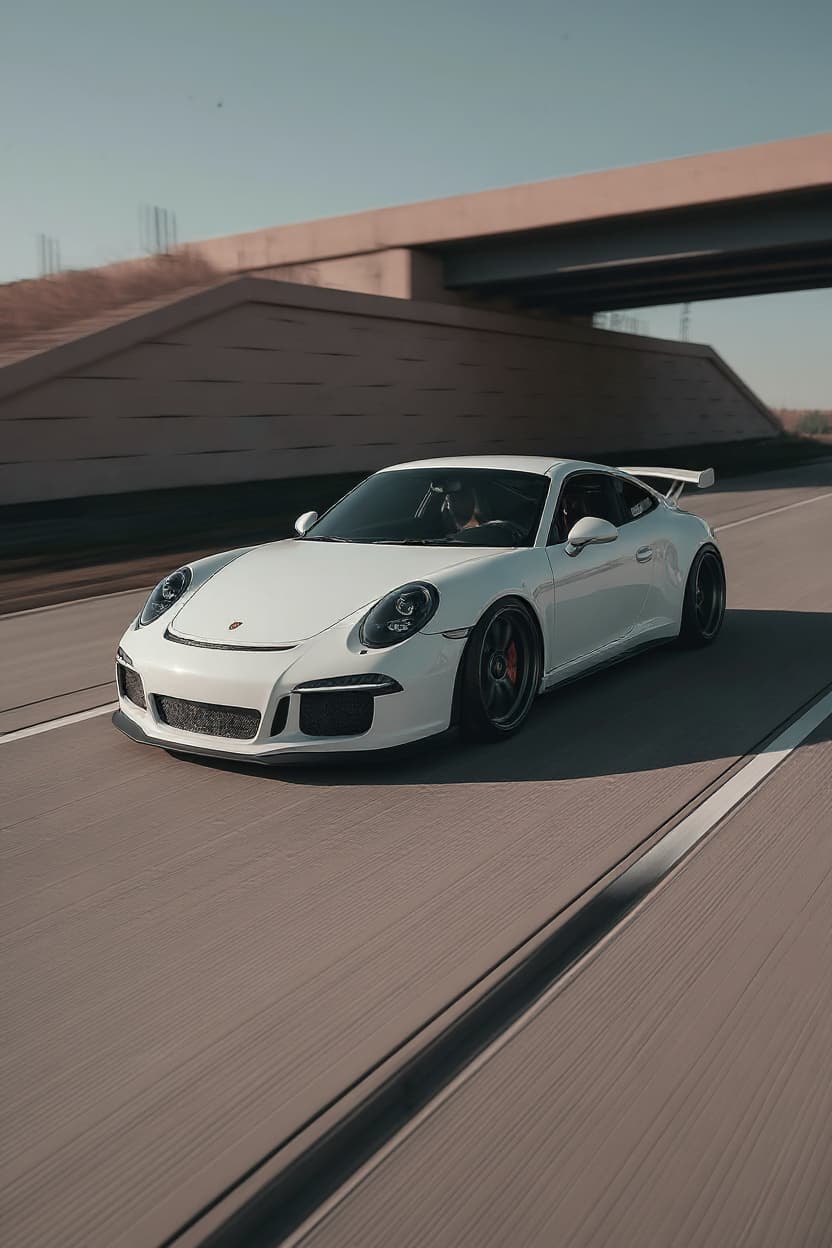
What a Stance Does to the Porsche 911 (991)
Stance on a 991 means something quieter than stance on a Japanese car. Porsche people have been arguing about the right 911 stance for decades. Pelican Parts has a Post Pictures of the Right Stance thread that runs past 160 pages, 911uk has its own Show Us Your Stance thread, and early-911 owners keep a thread of factory ride heights to compare against. The answer that keeps coming back is low and level, with the tyre tucked just under the arch and the wheel flush, not stretched rubber and extreme camber. The 991 (2011–2019) is a good car for it because the factory already offered part of the job. Porsche's PASM adaptive dampers came with a sport chassis option that sat the car lower. Many cars also have the front-axle lift system, which raises the nose for kerbs and ramps, and that option is what lets a lowered 991 live on real roads. The aftermarket picks up from there in two ways. Lowering springs keep the factory dampers: H&R sells fixed-rate springs and its adjustable VTF springs, which let you set the drop on the car, and KW makes height-adjustable springs for the 991 with a 15–35 mm range. Coilovers replace the dampers and go further, at a higher price. Searches for 991 stance are small, but the people doing them usually own the car and want to know how low is right before they spend. The short answer from the forums: about an inch, set level front to rear, with the wheels filling the arches.
Real Build Cost for a 911 (991) Stance
Lowering a 991 is mostly about springs, and the prices are known. H&R's fixed-rate lowering springs for the 991 Carrera are listed at £401.35 at Suspension Secrets, with separate part numbers for the Carrera 2WD, the Carrera 4 and GTS, and the Turbo with front-axle lift, so order by exact model. H&R's adjustable VTF springs for the Carrera and Carrera S cost $1,295 at Flat6 Motorsports and allow about 15–35 mm of drop at the front and 20–40 mm at the rear. That listing is for PASM cars without PDCC, which matters, because cars with Porsche's active anti-roll system need different parts. KW's height-adjustable springs cover a similar 15–35 mm range. On 911uk, owners who tried both describe H&R as noticeably stiffer and KW as kinder over bumps. Coilovers are the step past that, typically a few thousand dollars, and only worth it for track use or a drop beyond what the springs allow. Whichever route you take, plan for a corner balance and a full alignment, because a 911's rear-engined balance is sensitive to ride height. Wheels finish the look. Carrera models use a 5x130 bolt pattern, while GT3, Turbo S and some other models use centre-lock wheels, so check yours. Keep the front-axle lift working after lowering if you have it; that system is the difference between a low 911 you can drive and one you cannot get out of a car park. Add it up as an estimate: springs, alignment and corner balance come to $1,000–$2,500.
Render your 911 (991) before you buy anything
On a 991 the difference between right and too low is a few millimetres, and the forums will tell you which side you are on. Upload a photo of your own 911, choose stance, and see it lowered and level with the wheels flush in about 30 seconds, before you order springs.
Upload your 911 (991) photo, free →Put a Stance on Your Own 911 (991)
- 1Upload a photo of your 911 (991). Upload any decent photo; a three-quarter or side view suits stance and aero changes best. JPG or PNG, up to 10MB.
- 2Select Stance as your style. Your 911 (991)'s own shape guides the render, so the result is your specific car reworked rather than a generic model.
- 3Download your render. About half a minute later it's ready. Free renders carry a watermark; Pro ($14/mo or $69/yr) delivers 250 clean HD renders a month, great to hand an installer.
Planning your 911 (991) stance build?
- best cars for stance builds: 12 platforms that take a drop well
- how to stance a car: the setup guide: suspension, wheels and alignment in order
- Try it on your own 911 (991) with the wheel visualizer.