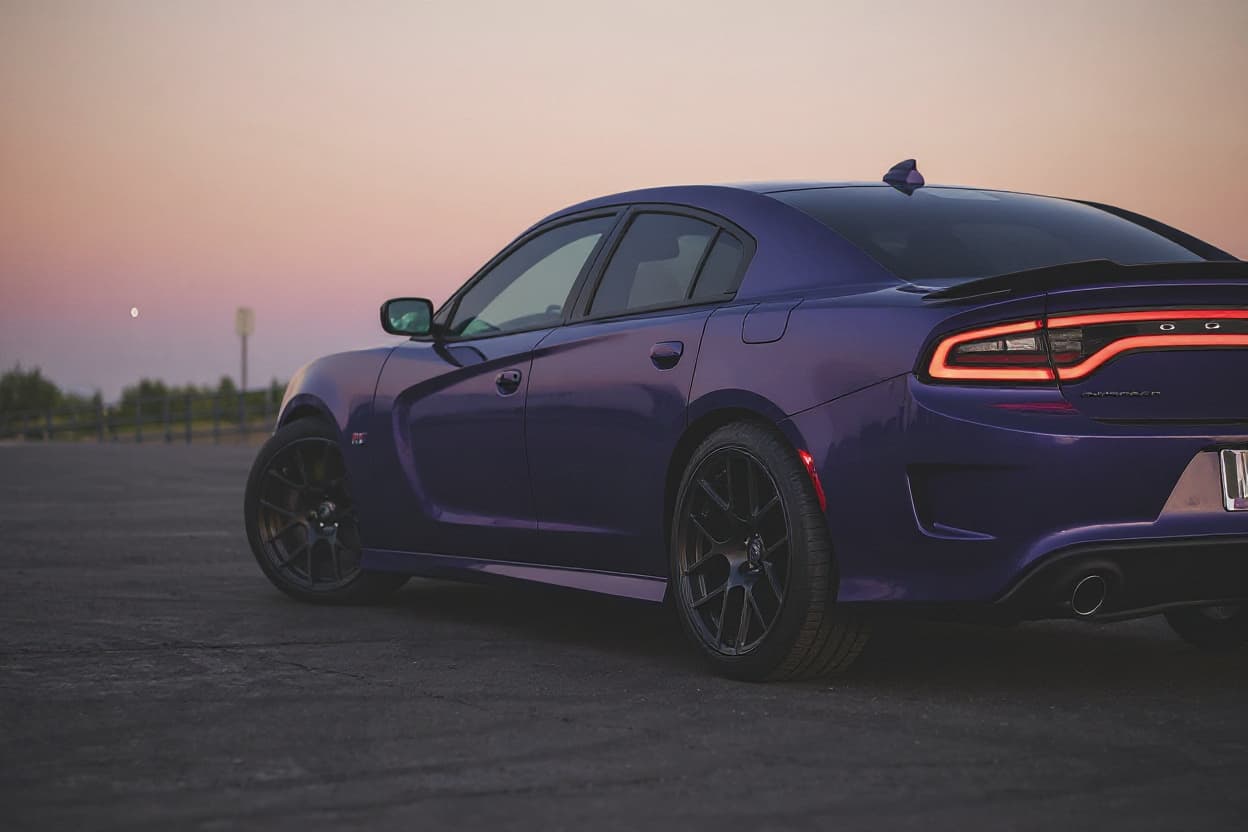
The Dodge Charger Stance, Explained
The stance formula applied to the Dodge Charger is simple to state and hard to execute: drop the car as far as the setup permits, and fit wheels that sit flush with — or slightly beyond — the fender lip. Four-door muscle. Hellcat Widebody is OEM benchmark — extend that aesthetic to other trims. Get it right and the Charger's whole silhouette changes from factory to intentional; the car looks planned rather than merely lowered.
Budgeting a Charger Stance Build
A stanced Charger you can still daily starts at the suspension: coilovers from Fortune Auto, Tein, KW V2, or BC Racing occupy the $600–$1,500 bracket. From there the fitment work begins — lower-offset wheels push the tyres out toward the fender lip, and rolling the fenders keeps them from rubbing at the new height. If you want show height without daily compromise, air suspension (Air Lift 3P, AccuAir) raises and drops the car on demand, at an extra $2,500–$5,000. The full stance investment on the Charger lands around $800–$4,000.
Preview your Charger before the build starts
On a stanced Charger the margin between dialled and off is thin: wheel width against offset, drop against arch, tyre against lip. TunedRides shows the completed stance on a photo of your own car first, so you can judge the proportions before committing to a single component.
Upload your Charger photo, free →Put a Stance on Your Own Charger
- 1Upload a photo of your Charger. One good photo does it — profile shots read stance and aero changes most accurately. JPG or PNG, up to 10MB.
- 2Select Stance as your style. The AI maps your Charger's panels and stance before rendering, so the result fits your exact car rather than a stand-in.
- 3Download your render. Roughly 30 seconds to render. The free tier watermarks output; Pro ($14/mo or $69/yr) removes it and adds 250 HD renders a month for builders and shops.