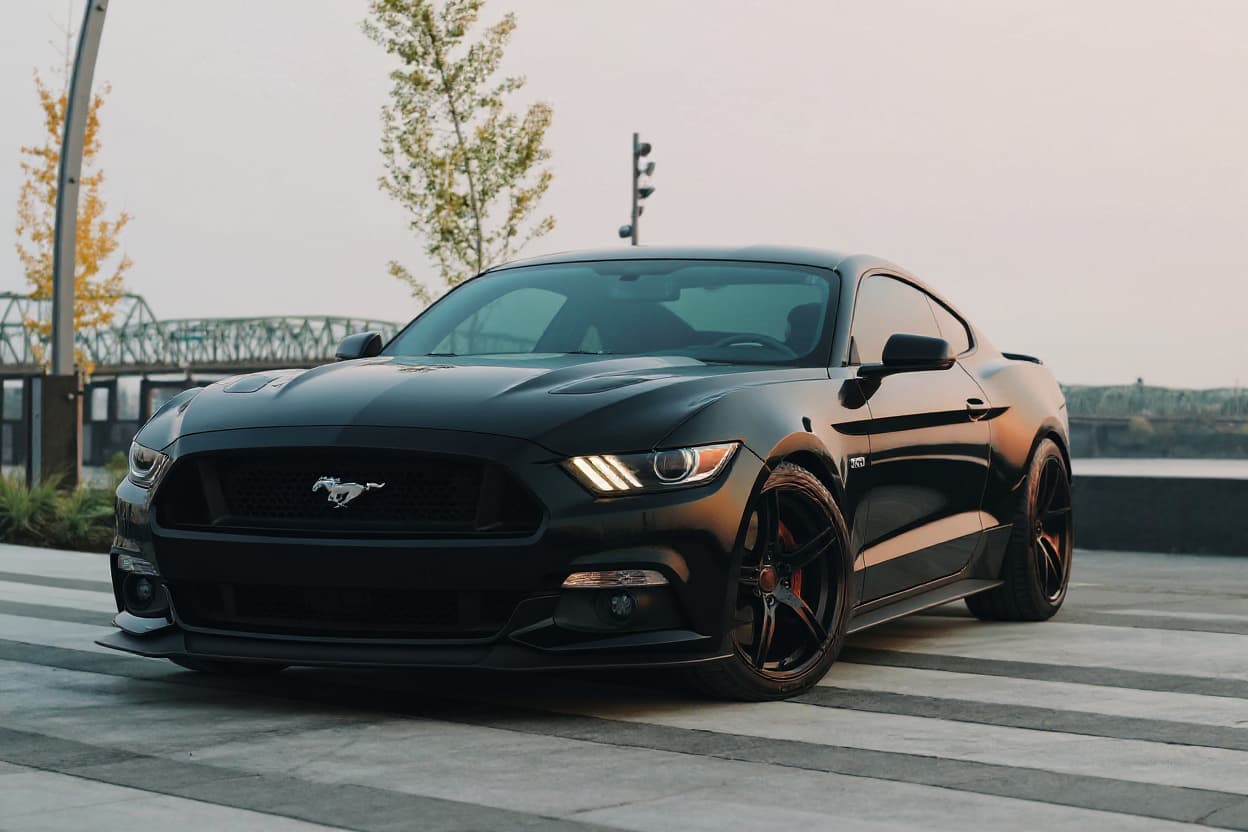
 AI render · Stance
Bagged Car Guide: Air Suspension, Cost, and What to Expect
A bagged car uses air suspension, pneumatic airbags replace conventional springs, allowing the driver to adjust ride height electronically. The result: your slammed car can drop to pavement-scraping stance at shows and rise to a functional driving height on the road. No jacking, no spring swaps. A switch or phone app does it in seconds.
How Air Suspension Works
An air suspension system replaces the car's coil springs with inflatable rubber air bags (also called air struts or airbags). A compressor pumps air into the bags to raise the car. Venting air out of the bags lowers it. The management system, a controller, solenoid valves, and pressure sensors, regulates each corner individually, allowing precise height control at each wheel.
- Air bags / air struts, the inflatable components that replace the spring. Available as separate bags (used with aftermarket coilover bodies) or as complete strut assemblies (strut + bag as one unit). Air Lift Performance, AccuAir, Airrex, and Universal Air are the primary brands.
- Compressor(s), electric air compressor that pressurizes the system. Single compressor is standard. Dual compressor setups are faster and more reliable. Typically mounted in the trunk or under the car.
- Air tank / reservoir, stores compressed air so the compressor doesn't have to run on every adjustment. Larger tanks mean faster height changes. Most builds use 2.5–5 gallon tanks.
- Management system, the controller (manual switches, digital display, or phone app via Bluetooth) plus solenoid valves that direct airflow to each corner independently. The management system determines how fast and how precisely you can adjust height.
Air Suspension vs Coilovers: Key Differences
- Adjustability: Air suspension adjusts while driving. Coilovers require jacking the car and turning a wrench.
- Daily use: A bagged car can be raised for driveways and speed bumps. A coilover at show height cannot.
- Ride quality: Air suspension at higher pressures is generally softer and more comfortable than a slammed coilover setup.
- Cost: Air suspension costs $2,500–$8,000 installed. Coilovers cost $700–$3,500. Air is significantly more expensive.
- Complexity: Air systems have more failure points. Compressor failures, airline leaks, solenoid issues. Coilovers are mechanically simpler.
- Show height: Both can achieve the same minimum height. Air gets there without commitment.
What Does a Bagged Car Cost?
- Entry level (manual management, single compressor): $1,800–$3,000 in parts. $500–$1,000 installation labor. Total: $2,300–$4,000.
- Mid-range (digital management, dual compressor, 5-gal tank): $3,000–$5,000 in parts. $800–$1,500 installation. Total: $3,800–$6,500.
- Premium (AccuAir e-Level or Air Lift 3P with ride height sensing): $5,000–$8,000 in parts. $1,000–$2,000 installation. Total: $6,000–$10,000.
- Custom fab (fender notching, hidden compressor install, clean trunk build): Add $1,500–$5,000 for shop hours depending on complexity.
Which Cars Respond Best to Air Suspension
The best platforms for a bagged build are cars with available aftermarket air strut kits. This removes the need for custom fabrication. High-demand platforms with off-the-shelf air kits include: Volkswagen Golf / GTI / Jetta, Honda Civic (EG, EK, FK, FN generations), Subaru WRX/STI, BMW 3 Series (E46, E90, F30), Nissan 350Z/370Z, Ford Mustang (S197, S550), and Dodge Charger/Challenger. The more popular the platform, the more kit options and the lower the installed cost.
See what your car looks like bagged using the TunedRides AI car photo editor. Upload your car photo and see a slammed, bagged stance in 30 seconds before committing to the air suspension install.
Frequently Asked Questions
What does bagged mean for a car?
A bagged car runs air suspension. Inflatable airbags replace the conventional coil springs. The driver can adjust ride height electronically: raise the car for normal driving, lower it to show height at the touch of a button. 'Bagging' a car refers to installing this air suspension setup.
Is a bagged car good for daily driving?
Yes, a bagged car is the most practical path to a slammed stance for a daily driver. You drive at a comfortable, functional height and drop the car to show height when parked or at events. The ride quality at normal height is generally better than a slammed coilover setup.
How long does air suspension last?
Quality air bags from brands like Air Lift Performance and AccuAir typically last 5–10 years with proper maintenance. Compressors are the most common failure point and typically need replacement every 3–7 years depending on use. Keep moisture out of the air lines and the system will last significantly longer.
What is the difference between bagged and static stance?
A bagged car adjusts ride height electronically. You can drive high and show low. A static stance car is fixed at one ride height. Usually as low as possible with no ability to raise. Static builds are used for extreme show cars. Bagged builds are for enthusiasts who want the slammed look with daily usability.
See your car bagged before you build it. Render it free. Upload your photo or choose a stock model.
Try it free — free →No credit card required. Free tier available.