What Is a Drift Build?
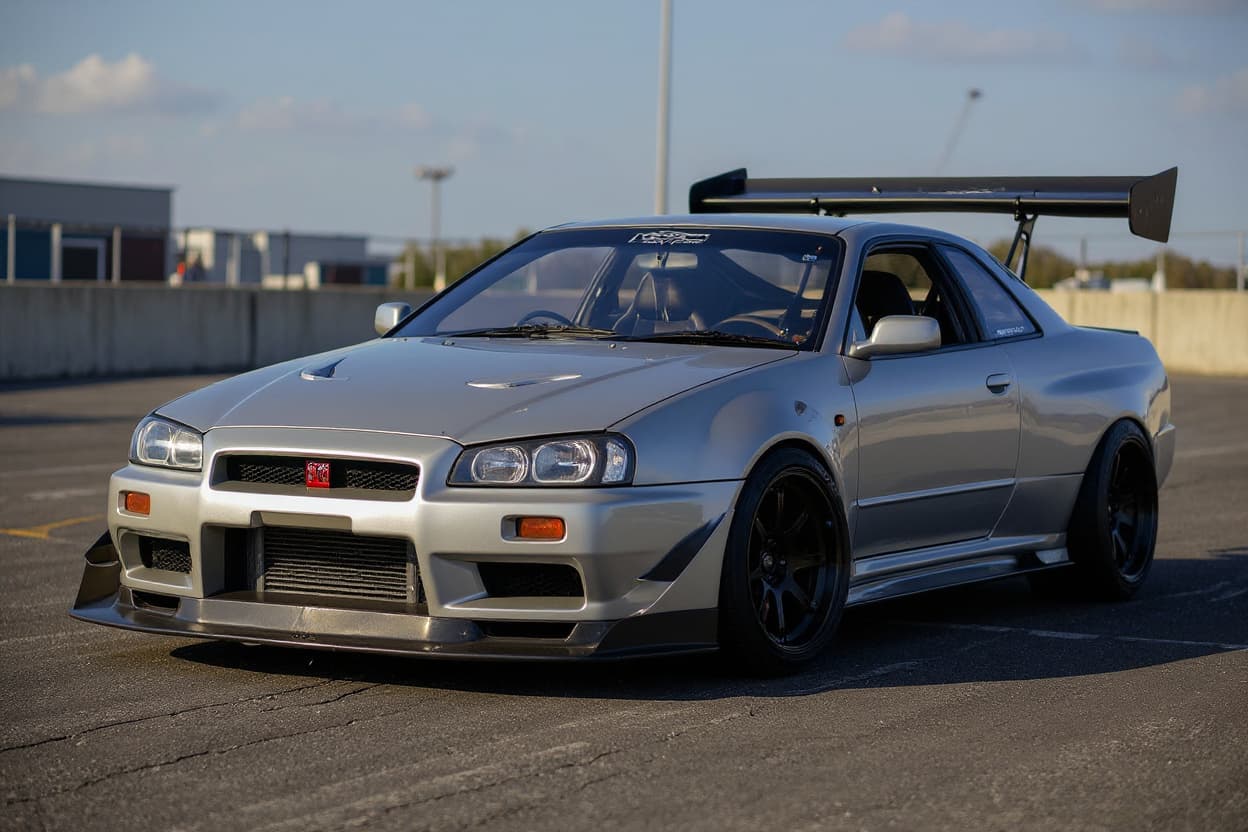
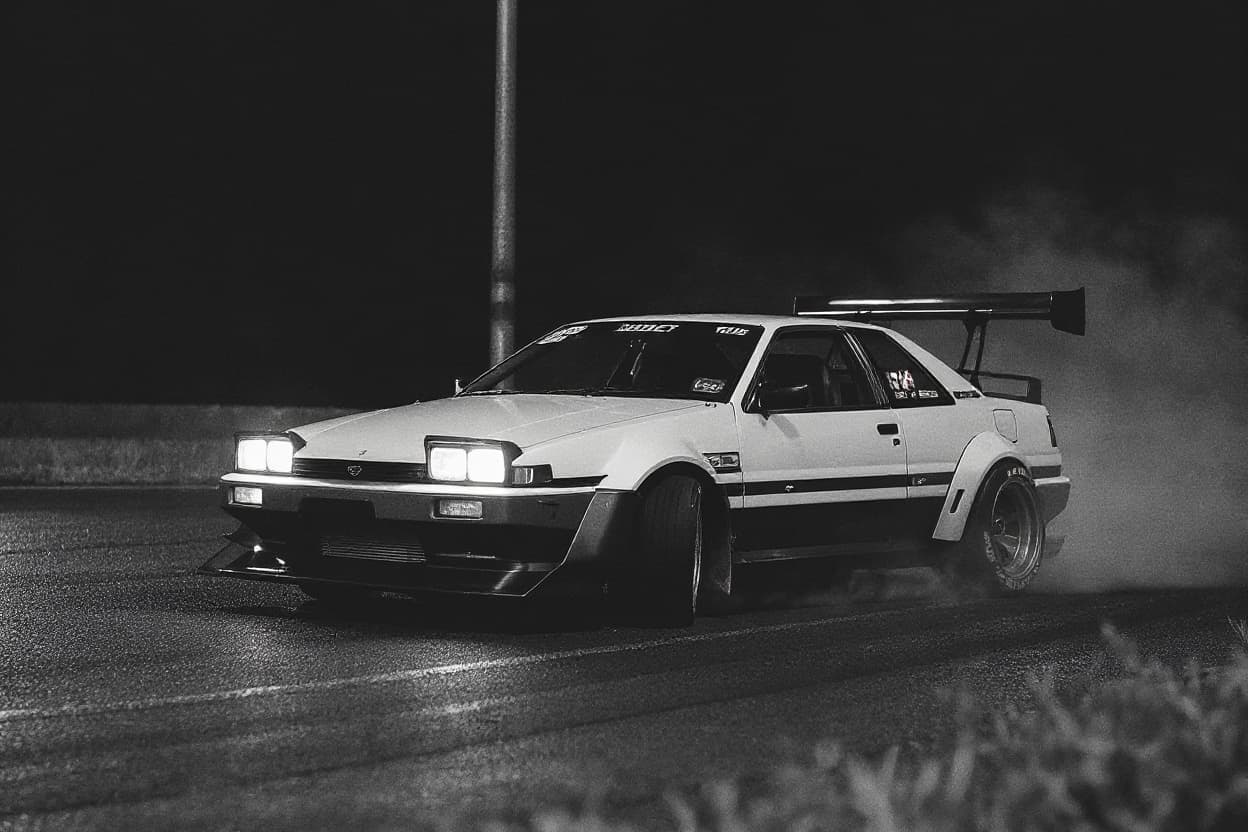
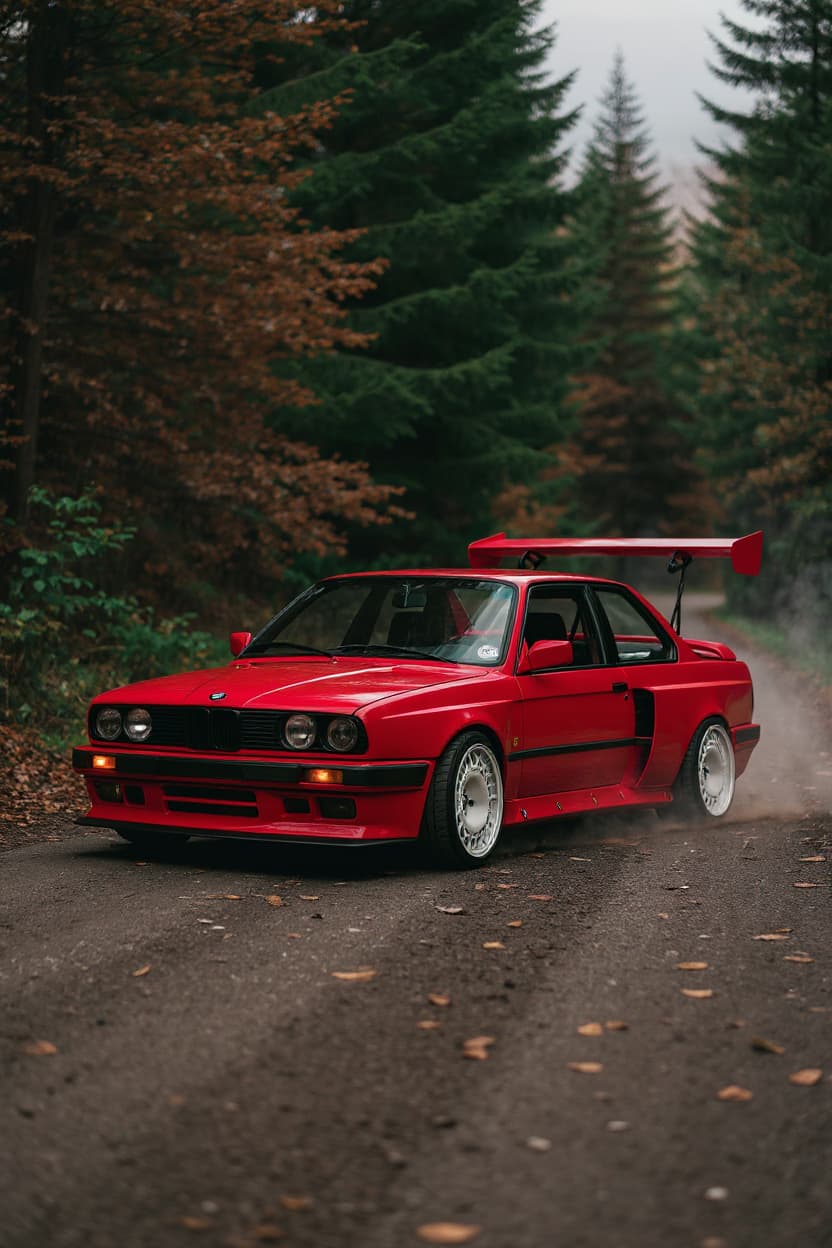
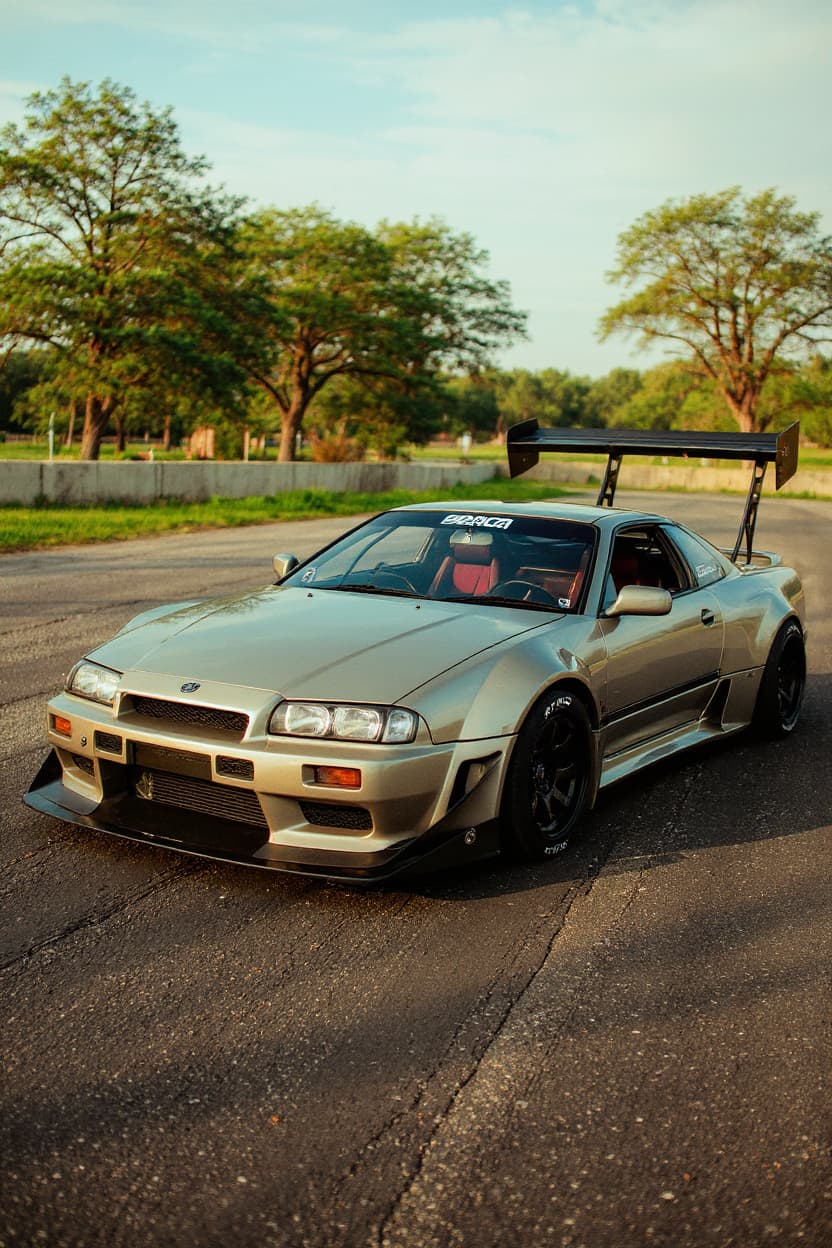
A drift build is a car set up specifically to be driven sideways, at any moment, at any angle, on demand. The defining hardware is a welded or locked rear differential, a stiff rear suspension that doesn't collapse under load, a hydraulic e-brake for initiation, and aero that keeps the car planted at high slip angles. The visual hallmarks are bolt-on overfenders to clear staggered rear tires, a high-mounted GT wing, a deep front splitter with corner canards, and a vented hood for cooling.
The aesthetic emerged from Japan's toge mountain runs and parking-lot drift scenes in the 1990s, formalised in D1 Grand Prix, then exploded globally with Formula Drift in 2004. Today drift is a discipline with its own car culture, kit makers (Origin Lab, BN Sports, Rocket Bunny), and dedicated platforms.
The Platforms That Defined Drift
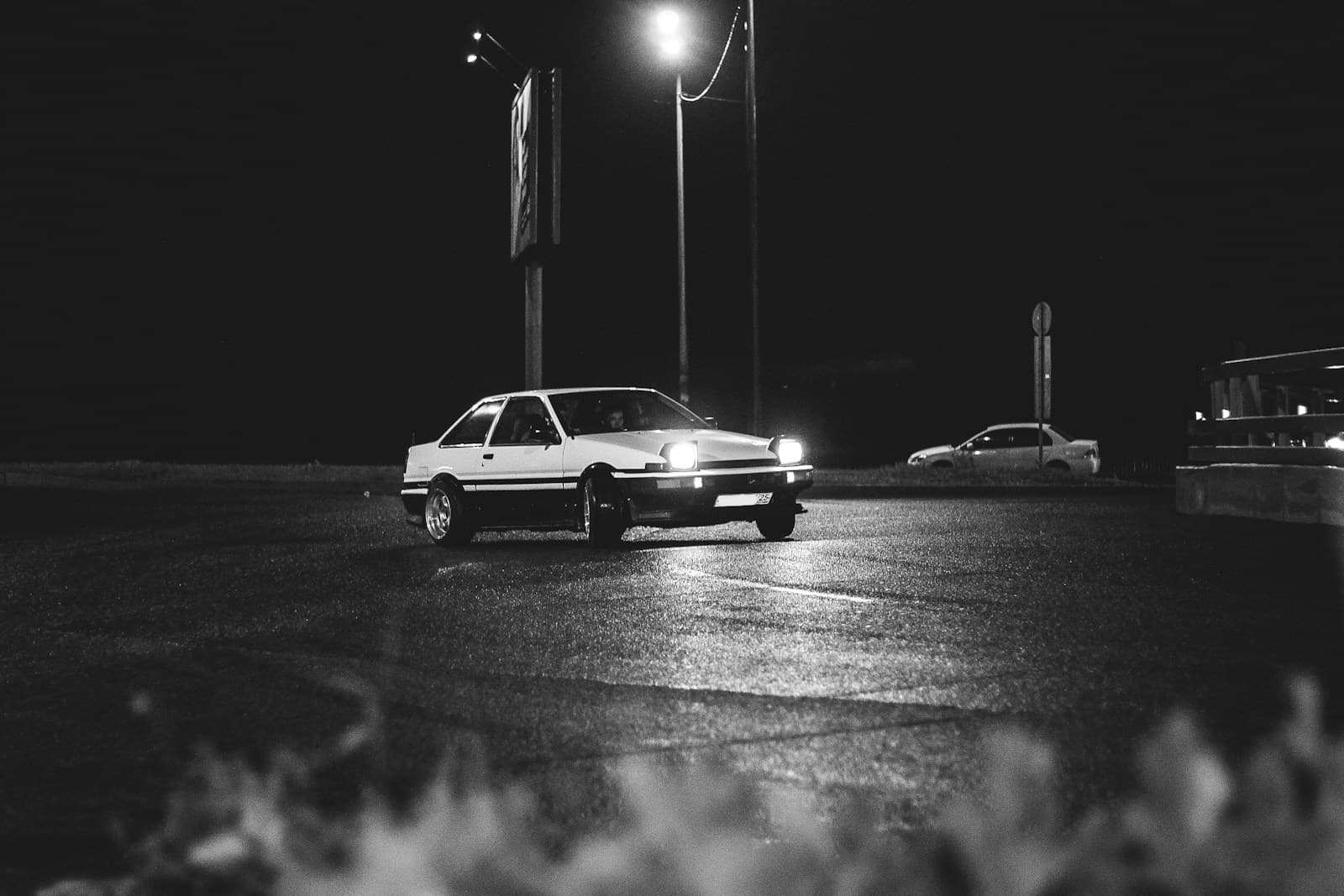
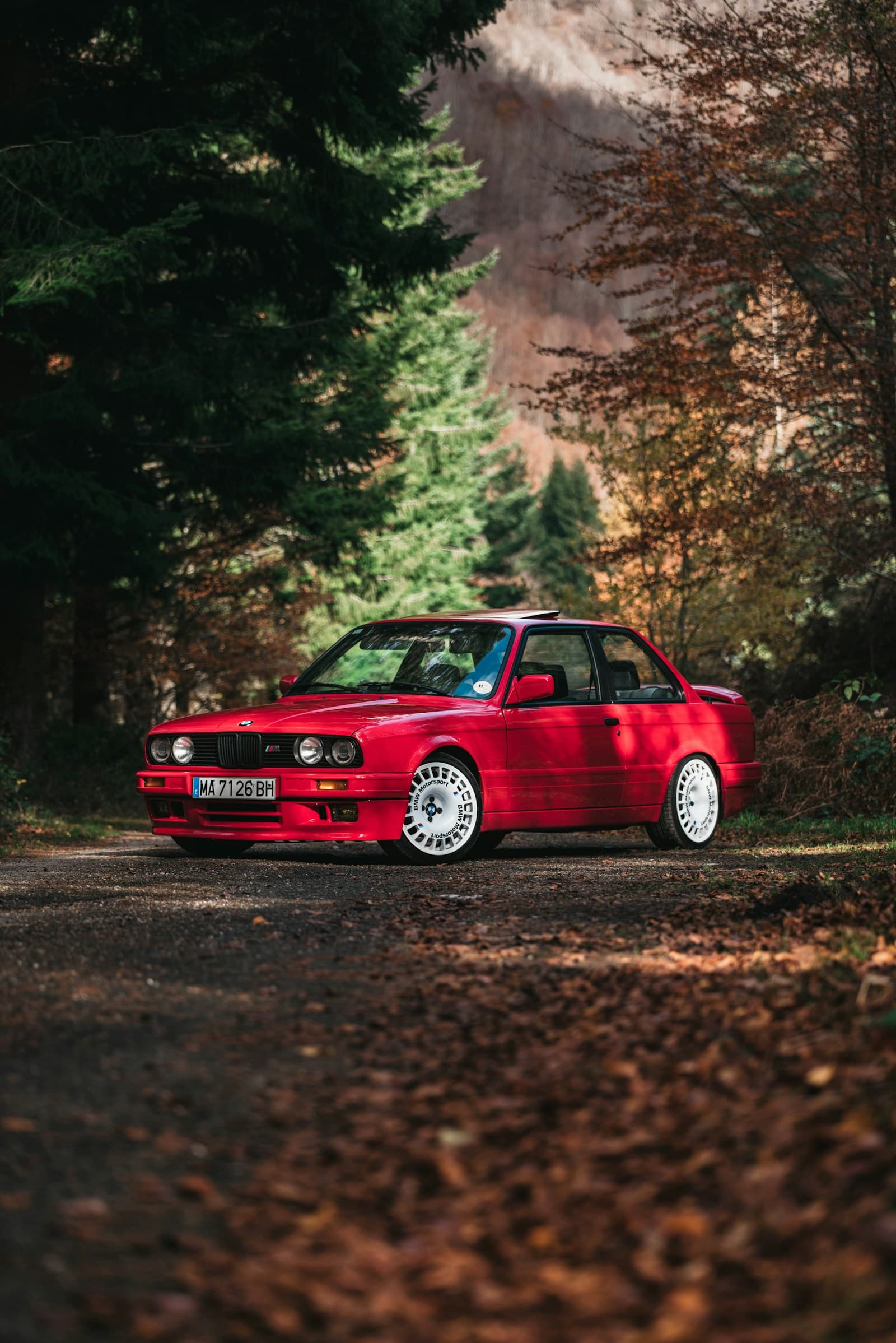
Drift culture has its core platforms, and the order matters. The Toyota AE86 is the spiritual ancestor, light, RWD, balanced, made famous by Keiichi Tsuchiya and the Initial D manga/anime. The Nissan 240SX/Silvia S-chassis (S13/S14/S15) became the global drift workhorse because it's cheap, RWD, KA24/SR20-powered, and infinitely modifiable. The BMW E36/E46 platform took over the European and US budget-drift scenes in the 2010s when 240SX prices climbed.
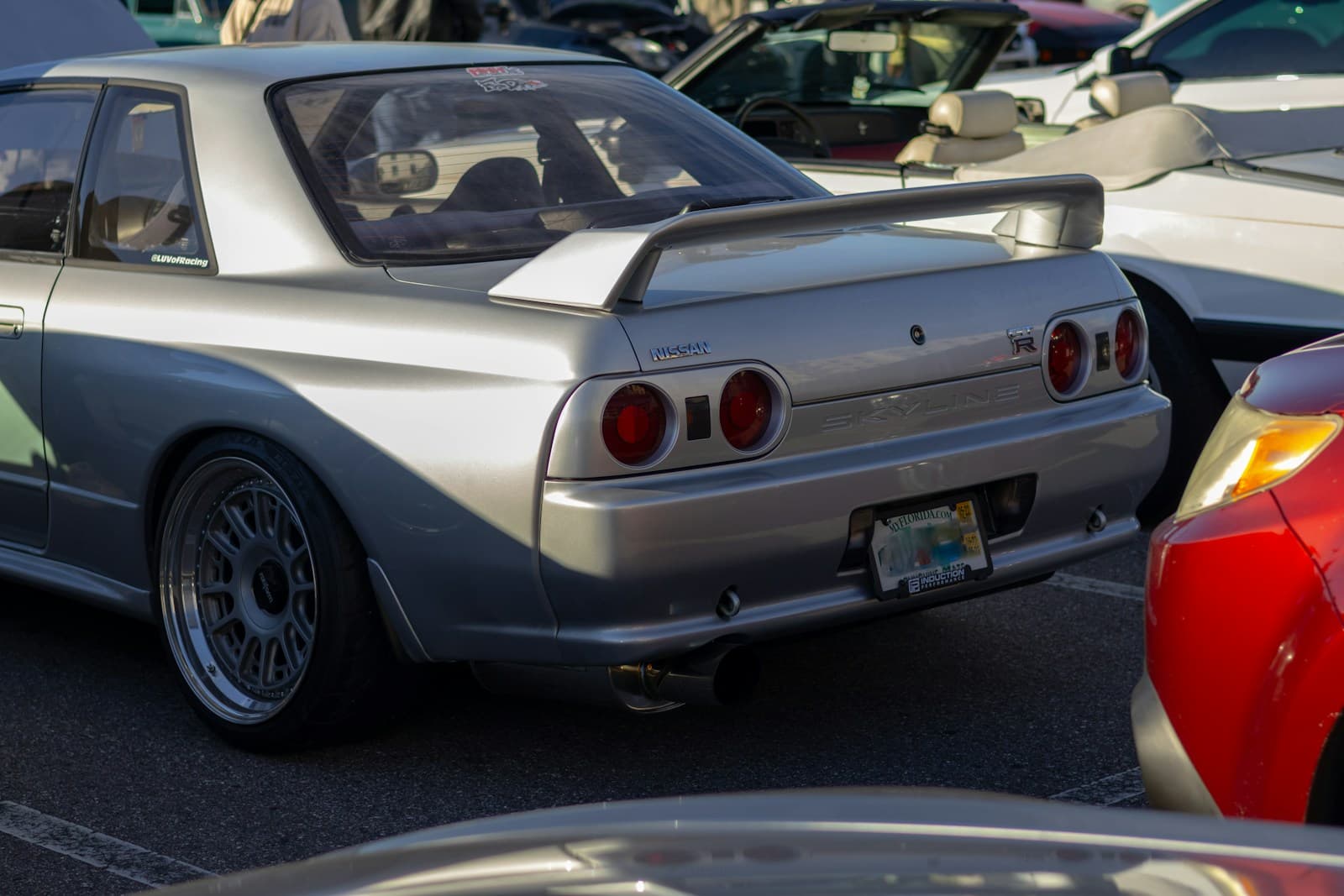
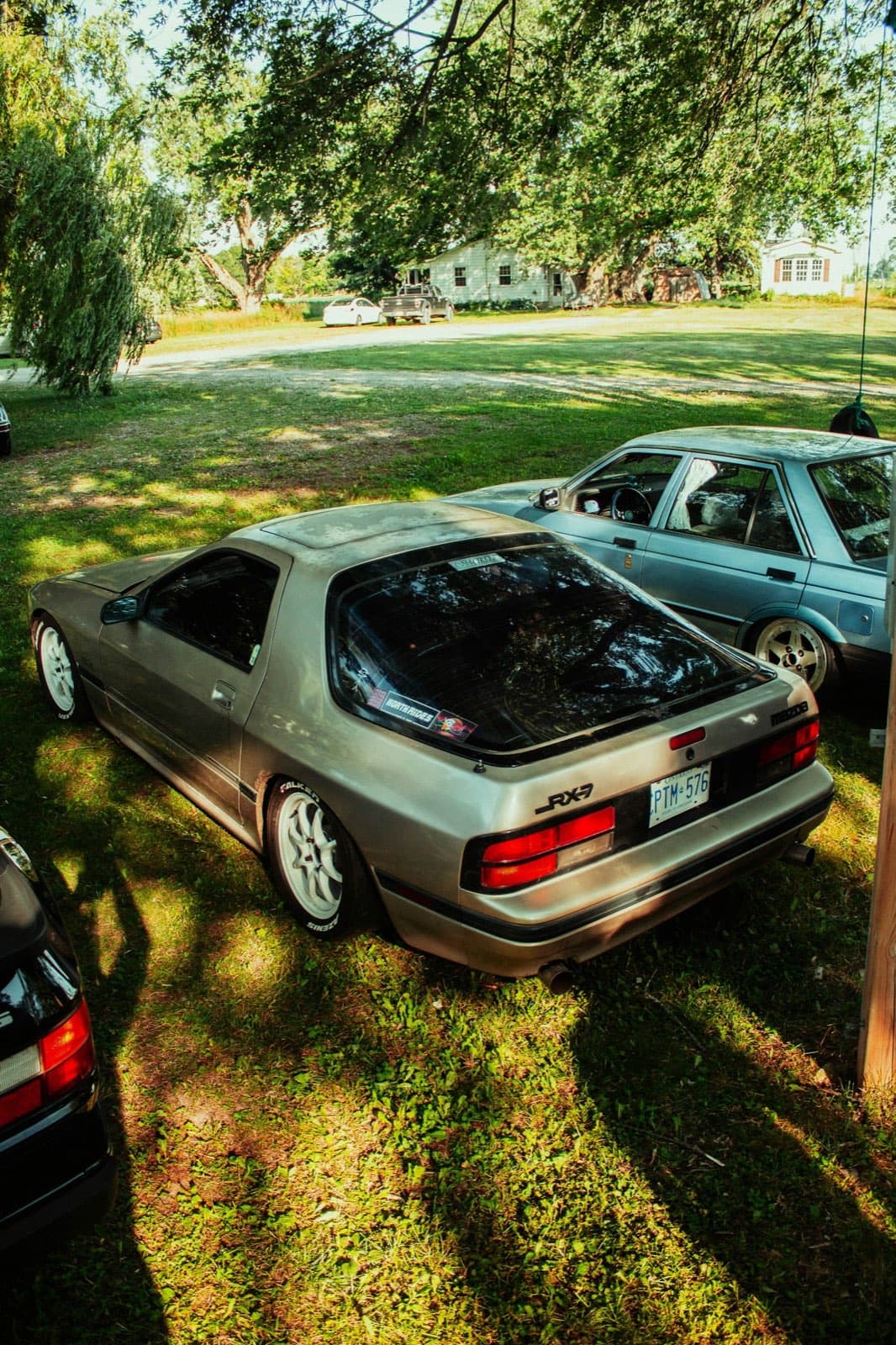
On the premium side: Toyota Chaser JZX100 (1JZ-powered Japanese legend), Nissan Skyline R32/R33/R34, BMW M3 (E36/E46/E92), Mazda RX-7 FC and FD, and the modern Toyota GR86 / Subaru BRZ twins. Drifters argue about platform choice the way guitarists argue about tubes vs solid-state. Endlessly, with no winner.
What Goes Into a Real Drift Build
A proper drift build is a stack of decisions that all have to agree. Skip any one and the car either won't slide, won't finish a competition, or won't survive a weekend at a track day:
- Locked rear differential: Welded (cheap), 2-way mechanical LSD (KAAZ, Cusco, OS Giken), or factory locker. Both rear wheels must spin together at all slide angles.
- Hydraulic e-brake: Replaces stock cable handbrake with hydraulic actuation. Used for initiating slides and adjusting mid-corner.
- Extended steering angle: Modified or replaced steering knuckles to allow 60°+ of lock, way beyond stock, so the car can recover from extreme slides.
- Wide overfenders: Bolt-on overfender kits to clear staggered rear tires and proper offset wheels without rubbing.
- Rear-biased aero: High-mount GT wing with adjustable angle, splitter to keep nose planted. Aero balance determines mid-slide stability.
- Roll cage: Required for any competition; recommended for any track-day use. 6-point minimum, FIA-spec for sanctioned events.
Real Drift Build Costs
A bare-minimum grassroots drift car: $3K platform + $1K basic coilovers + $200 welded diff + $200 used wheels + safety gear. You're sliding at a track day for under $6K. A respectable amateur-grade competition car: $8K platform + $3K coilovers + $2K aero kit + $1.5K LSD + $1K hydraulic e-brake + $2K roll cage + $2K wheels and tires. Call it $20K all-in. Pro-tier Formula Drift cars are $150K–$500K+ once you add engine swaps, custom aero, fuel cells, and trailers.
The visualisation question is acute: drift aero changes the proportions of a car dramatically. A high wing and overfenders look right on some platforms and absurd on others. The AI render shows you the full kit on your specific car before you drop $5K on parts that don't suit your platform.
Show Drift vs Competition Drift
Two parallel scenes have grown out of the same culture. Competition drift cars (Formula Drift, D1) prioritise function, every panel, every aero choice, every tire is selected for performance. Show drift cars (the Japanese gakuran/onikyan scenes, US Wekfest) prioritise the aesthetic, extreme camber, polished wheels, full body kits, sometimes never seeing a track. Both are valid; both have built their own communities. Some of the best builds straddle the line, looking like show cars but still competition-capable.
What Our AI Render Shows
Our AI render captures the full visual transformation: high-mount GT wing, deep front splitter and canards, bolt-on overfender flares, staggered deep-dish wheels, and aggressive forward stance. It's real enough to confirm whether the drift aesthetic suits your platform, and which scale of wing and fender width reads right on your specific bodywork.
What it doesn't replace: the welder for the diff, the suspension tuner, or the track-day session. Use the render to validate direction and proportions, then bring it to your fabricator or kit supplier as a brief. Most users find one render saves them a weekend of forum-scrolling and a wheel-spec mistake.