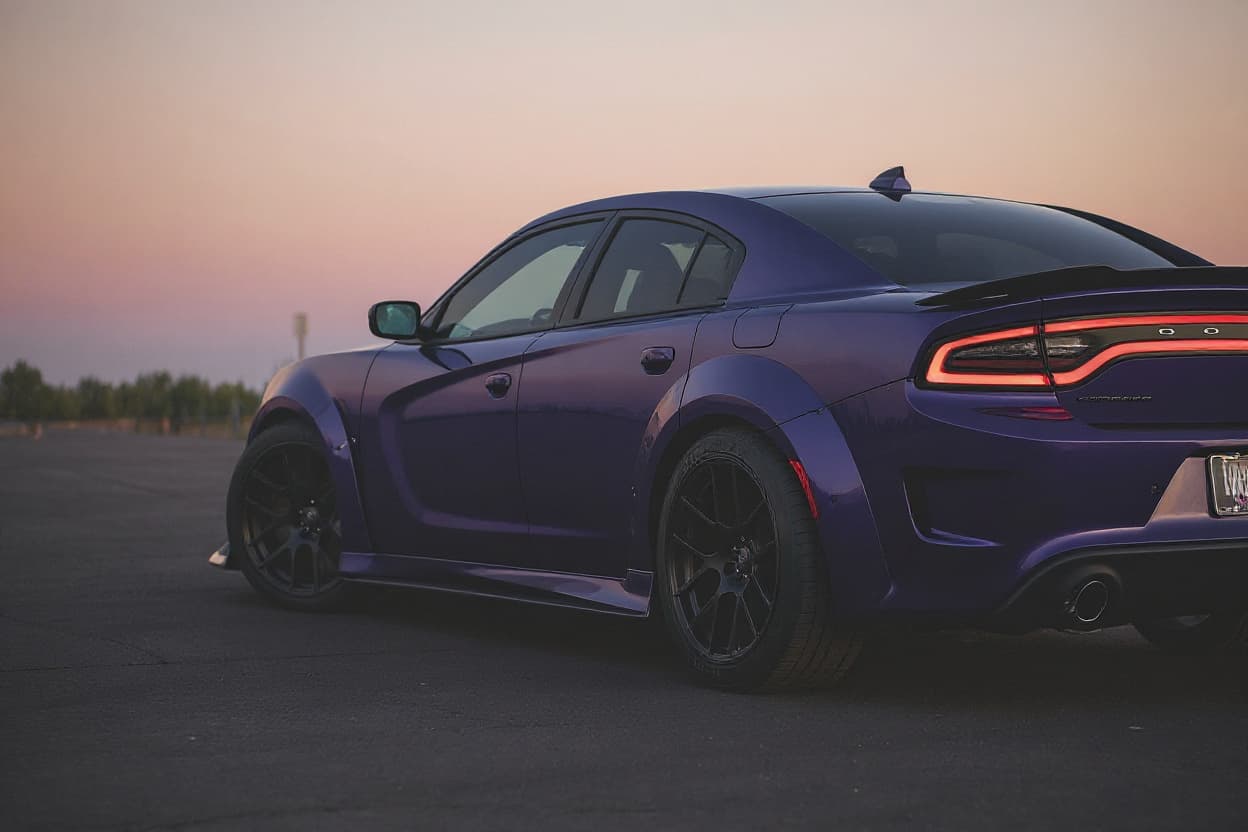
 AI render · Widebody
Widebody Kit Guide: What You Need to Know Before You Buy
A widebody kit installed properly, with body prep, paint, and alignment, runs $8,000 minimum on most platforms. The $4,000 kit price is only half the story. Here is everything you need to know before you commit to a Liberty Walk, Rocket Bunny, or Pandem build.
What Is a Widebody Kit?
A widebody kit adds width to a car's body, typically through extended fender flares, wider bumpers, side skirts, and sometimes a wider rear quarter panel. The goal is a wider track, the distance between the left and right wheels, which allows larger wheels with aggressive offsets to sit flush with or slightly outside the body line.
There are two categories: factory widebody (the Dodge Charger Widebody, Porsche GT3 RS, BMW M3 Competition) where the manufacturer ships a wider body from the factory, and aftermarket widebody where a tuning house designs flares, skirts, and bumpers as a retrofit kit for an existing car. This guide is about the aftermarket side. The Liberty Walks, Rocket Bunnys, and custom builds. Liberty Walk's own line — which cars it fits and what the kits cost — is covered in the Liberty Walk kit guide.
The Major Kit Makers
Not all widebody kits are equal. The market has distinct tiers, and understanding them saves you from a $2,000 mistake.
- Liberty Walk (LB Performance): Japanese tuner house founded by Wataru Kato. Known for rivet-on flares that require no cutting. Kits range from $3,000 to $8,000 for the body parts alone. The rivets are intentional. They reference race car aero aesthetics. Fits: GT-R R35, Ferrari, Lamborghini, Mustang, Corvette, and dozens more.
- Rocket Bunny / Pandem: Both are brands under TRA Kyoto, designed by Kei Miura. Rocket Bunny is the original JDM brand; Pandem is the North American-market version. Known for clean FRP kits with a smoother, more integrated look than LB. Most kits require fender cutting. Price: $2,500–$6,000. Fits: BRZ/GR86, Supra A80/A90, GT-R, EK/DC Civics.
- RWB (Rauh-Welt Begriff): Exclusively hand-built by Akira Nakai on Porsche 911s (air-cooled preferred). Not a kit you buy, Nakai travels to your location and builds the car in one session. Waitlist is 2+ years. Cost: $15,000–$30,000 for the bodywork alone. Each car is unique and gets a name.
- Widebody Labs, US-based fabricator offering custom-width fender flares for American muscle and trucks. Lower price point ($1,200–$3,500) but requires significant body work. Popular for Charger, Challenger, and F-150 builds.
- Origin Lab: Japanese drift-oriented tuner. Kits designed for track use, slightly more aggressive and drift-specific than LB or Rocket Bunny. Strong presence in D1GP and Formula D paddocks.
The Real Cost Breakdown
This is where most buyers get surprised. The internet shows a $4,000 kit price and that is what people budget for. The actual installed cost on a GT-R or Mustang looks like this:
- Kit purchase: $3,500–$8,000 (FRP) or $6,000–$15,000 (carbon fiber)
- Body prep and fender modification: $1,500–$2,500 (cutting, rolling, shaping, filling gaps)
- Paint to match (full kit, 4–6 panels): $1,200–$2,500 depending on color and metallic
- Labor for fitment: $600–$1,200 (even bolt-on kits take 10–20 hours of skilled time)
- New wheels (required, your current wheels likely will not clear the new fenders): $1,500–$4,000
- Alignment: $150–$300 after wheel changes
- Total realistic range: $8,500–$18,000+ depending on car and kit
Carbon fiber kits are available from some makers (LB Performance, Rocket Bunny). They are significantly lighter and look better up close, but pricing starts at roughly 2× the FRP equivalent. A carbon LB kit for the GT-R R35 runs $12,000–$18,000 for parts alone.
Before committing $8,000–$18,000 to a widebody build, see what it looks like on your actual car. TunedRides renders photoreal widebody transformations from your car photo in 30 seconds. Free to try.
Try TunedRides free →
Kit Types: Bolt-On vs Rivet-On vs FRP vs Carbon
The material and attachment method affect cost, difficulty, and the final look significantly.
- Bolt-on flares: attach to existing fender mounting points. Minimal body modification. Most street-friendly. Common on Duraflex and budget-tier kits. Fit is never as tight as rivet or bonded.
- Rivet-on flares: Liberty Walk's signature approach. You rivet the flares directly to the body panel. Requires drilling. Removing them leaves holes. This is a permanent decision on resale value.
- FRP (Fiberglass Reinforced Plastic): standard material for most aftermarket kits. Lightweight, paintable, moderate strength. Most common. Prone to stress cracking if the car sees track or rough roads.
- Carbon fiber: premium option. Lighter, stiffer, and visually distinct with a clear coat showing the weave. Not required unless you are building a track car or an extreme show car. Budget 2× versus FRP.
Best Cars for Widebody Kits
Certain platforms have far more kit options, community support, and proven results. The sweet spots for widebody builds are:
- Nissan GT-R R35. The most widebody-friendly JDM platform. LB and Rocket Bunny both have multiple kits. Parts supply is excellent.
- Porsche 911 (964/993 air-cooled), RWB territory. The curves of the 911 respond especially well to wide flares.
- Toyota Supra A80, the Veilside Fortune kit on the A80 is one of the most iconic widebody builds ever made. JDM scene staple.
- Ford Mustang S550. Huge aftermarket. RTR Vehicles makes factory-quality widebody conversions. Entry-level widebody scene.
- Chevrolet Corvette C8. The mid-engine layout creates a naturally wide rear. Several shops are building FRP kits for it.
- Jeep Grand Cherokee Trackhawk, unusual pick, but the SUV silhouette with a proper widebody kit is aggressive and builds nicely. Kit cost is lower than JDM platforms. Roughly $6K installed.
See our full breakdown in the widebody kit hub and the Jeep Trackhawk widebody guide.
The Hidden Costs Nobody Warns You About
- Wheel offset: most widebody kits push the fender lines 40–80mm wider per side. Your existing wheels, likely running ET35 or ET40, will sit too far inboard and look wrong. Budget for new wheels with a more negative offset (ET0 to ET-20 range) or spacers.
- Rubbing: if you choose the wrong offset or do not roll the fenders properly, the tire will contact the flare under compression. You will hear it on every bump. Fixing it post-install costs $300–$600 in fender rolling and alignment work.
- Gap filling: FRP kits rarely fit perfectly out of the box. A good body shop will spend 4–8 hours per panel blocking, priming, and leveling gaps before paint. This labor is almost never included in kit price quotes.
- Insurance: some insurers will not cover modified vehicles or will surcharge heavily. Call before you buy the kit.
- Resale: a widebody car appeals to a very specific buyer. Riveted flares with holes through the fender sheet metal limit your resale audience significantly.
Is a Widebody Worth It?
Honest answer: it depends entirely on what you are building for. If this is a show car or a track car that you intend to keep long-term, a widebody is one of the most dramatic and rewarding transformations you can do. The visual impact is real, a properly executed LB Mustang or RWB Porsche turns heads at any car meet.
If you are trying to add value to a car before selling it, stop. Widebody kits almost never increase resale value above the cost of installation. They narrow your buyer pool significantly.
If you are uncertain what the kit will look like on your specific car, use the TunedRides widebody visualizer first. Upload your car photo, pick a widebody style, and get a photoreal render of your car transformed, before spending $8,000 finding out it is not what you imagined.
Related Widebody Guides
- Widebody kit cost guide, full breakdown of kit, install, paint, and wheel costs by brand.
- Best cars for widebody kits, which platforms respond best to widebody treatment.
- Hellcat Widebody guide, OEM and aftermarket widebody on the Challenger and Charger Hellcat.
- Supra widebody kit guide, Pandem, Liberty Walk, and aftermarket options for the A90 and A80.
- Widebody kit before and after, what real installs look like vs. AI renders.
Frequently Asked Questions
How much does a widebody kit cost installed?
A widebody kit installed realistically costs $8,000–$18,000 when you include the kit ($3,500–$8,000), body prep ($1,500–$2,500), paint ($1,200–$2,500), labor ($600–$1,200), new wheels ($1,500–$4,000), and alignment ($150–$300). The kit price alone is only about half the total cost.
What is the difference between Liberty Walk and Rocket Bunny?
Liberty Walk (LB Performance) uses a rivet-on flare system that does not require fender cutting. The rivets are visible and intentional. Rocket Bunny/Pandem kits by Kei Miura typically require fender cutting and have a smoother, more integrated look. LB kits tend to be more aggressive and polarizing; Rocket Bunny kits are more widely regarded as cleaner.
Can a widebody kit be removed?
Bolt-on flares can be removed and the fenders remain intact. Rivet-on flares (like Liberty Walk) leave drill holes through the fender when removed, restoring the fender requires panel replacement or extensive bodywork. FRP kits that are bonded with panel adhesive are permanent without significant damage.
Do I need new wheels for a widebody kit?
Almost always, yes. Widebody kits push the fender line 40–80mm wider per side. Existing wheels typically sit too far inboard and look wrong after the conversion. You will need wheels with a more negative offset (ET0 to ET-20 range for most platforms) to fill the wider fender correctly.
Render your car widebody before you commit. Free tier available. No credit card required.
Try it free — free →No credit card required. Free tier available.