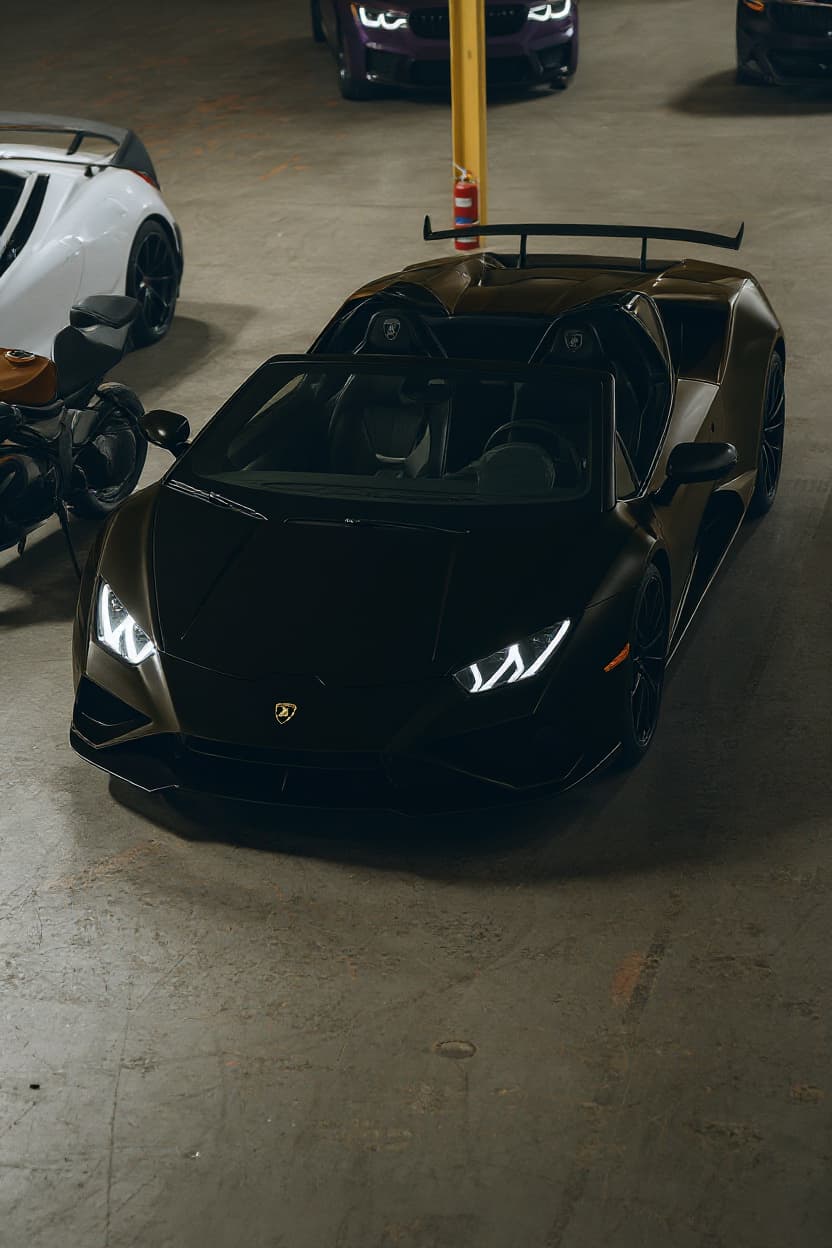
 AI render · Wraps
How Much Does It Cost to Vinyl Wrap a Car in 2026?
A full vinyl wrap costs $2,500–$6,000 for most passenger cars at a reputable mid-tier shop. The range spans $1,200 at a budget shop using cheap vinyl to $12,000 for an exotic with a premium installer and specialty film. Here are the actual numbers for 2026, broken down by vehicle type and installer quality.
Vinyl Wrap Cost by Vehicle Type
- Compact cars (Honda Civic, Toyota Corolla, VW Golf): $2,500–$3,500. Approximately 55–65 sq ft of vinyl. Simpler panel geometry, fewer recessed areas. The compact category is the most price-competitive.
- Sports cars and coupes (Mustang, Challenger, Supra, 911): $2,500–$4,500. Similar square footage to a compact but more complex panel shapes. Deeper hood contours, complex rear quarter panels. Labor hours are higher per panel.
- Sedans (Camry, Accord, 3 Series): $3,000–$4,500. Mid-range square footage, moderately complex panels. The roof and trunk are typically straightforward; the rear bumper with exhaust cutouts takes skill.
- Full-size trucks (F-150, Ram 1500, Silverado): $3,000–$5,000. Significantly more surface area than cars. A crew cab truck typically uses 120–140 sq ft of vinyl. Bed panels and cab rear are large flat sections that go quickly in labor, but overall footage drives cost.
- SUVs and crossovers (Tahoe, Grand Cherokee, X5): $3,500–$6,000. More square footage and more complex geometry than sedans. The rear hatch and third-row quarter windows add complexity.
- Exotic and supercar (Lambo, Ferrari, McLaren): $5,000–$12,000+. Panel complexity is the driver, engine covers, intakes, splitters, diffusers, and complex curves require significantly more labor hours. A Huracán rear engine cover is a 4–6 hour job alone.
- Vans and commercial vehicles (Sprinter, Transit): $4,000–$7,000. Maximum surface area. Roof work requires scaffolding or a lift. Flat panels go quickly but the total square footage is enormous.
Wrap Cost by Finish Type
- Gloss or satin solid color: baseline price. Avery SC900 or 3M 1080 in a standard solid color is the baseline. No upcharge. Expect $2,500–$3,500 for a compact or sedan.
- Matte finish: +$200–$400 over baseline. Matte vinyl costs slightly more per square foot and requires more care during installation.
- Brushed metal or carbon fiber texture: +$300–$600. Textured films cost more per square foot and require alignment skill during installation.
- Color-shift films (Avery ColorFlow, 3M Color Flip): +$600–$1,200. These films cost $12–$18 per sq ft versus $4–$8 for solid colors. The per-panel material cost nearly doubles.
- Chrome or mirror: +$1,000–$3,000. Chrome is the most difficult film to install, seams are extremely visible and the material is the least forgiving. Some shops refuse chrome on cars with rough paint.
- PPF + wrap combined: +$2,000–$5,000. Paint Protection Film applied as a base layer before or instead of color wrap. PPF provides scratch and chip protection. The combination is the premium choice for daily-driven performance vehicles.
See any wrap color on your car before you pay. TunedRides renders your car wrapped in 30 seconds. Any color, any finish, free.
Try TunedRides free →
Installer Tier Pricing
- Budget shops ($1,200–$2,200 for a compact): often use VViVid, Oracal 651, or unbranded vinyl. Lifespan: 1–2 years before edge lifting and fading. Surface prep is often minimal. Suitable for promotional wraps or temporary color changes.
- Mid-tier shops ($2,500–$3,500 for a compact): use Avery Dennison SC900 or 3M 1080. 5-year outdoor performance rating. Proper surface prep including wash, clay bar, and IPA wipe. Edges tucked into panel gaps. This is the appropriate choice for any car you care about.
- Premium shops ($3,500–$6,000+ for a compact): 3M Certified or Avery Authorized installers. Full panel removal and wrap, panels pulled, vinyl tucked behind the panel gap edge so no exposed edges exist. XPEL, Avery Supreme, or 3M Envision film. Warranty typically provided. PPF options available.
Partial Wrap Costs
- Hood only: $300–$600. The most popular partial wrap. Quick to install, high visual impact, affordable starting point.
- Roof only: $250–$500. Black roof wraps to simulate a panoramic roof or contrasting roof. Common on sports cars and luxury vehicles.
- Hood + roof: $500–$900. The most common two-tone partial wrap combination.
- Bumper wrap (front or rear): $200–$400. Color-matching or contrasting bumper wrap is popular for bumper refresh without a full wrap.
- Racing stripes: $400–$1,200. Full-length stripes from nose to tail. Price depends on stripe width, color, and whether the shop sources pre-cut or cuts on-site.
- Mirrors: $100–$250. Black mirror caps are among the most popular modifications. Quick, affordable, and high visual impact per dollar.
If a partial is the direction, the dedicated partial car wrap guide covers the combinations that actually look intentional, DIY difficulty by panel, and when the math says just do the full wrap. Leasing the car? Wraps are lease-friendly — the rules are in can you wrap a leased car.
DIY Wrap Cost
DIY vinyl materials for a compact: $300–$600 for the vinyl (55–70 sq ft at $5–$8/sq ft for Avery or 3M). Tools add $100–$200 (squeegee, heat gun, knifeless tape, IPA spray, clay bar kit). The total material cost for a DIY full wrap on a sedan is $400–$800.
The catch: the failure rate for first-time DIY full car wraps is very high. Complex panels, door handles, mirrors, bumper curves, and roof edges, require technique built over many wraps. Most first attempts produce visible bubbles, uneven tension lines, and lifting edges within months. A partial wrap (hood or roof only) is a realistic DIY starting point.
Use the car wrap visualizer to see exactly what color or finish you want before booking a shop or buying material.
Frequently Asked Questions
How much does it cost to wrap a car?
A full vinyl wrap on a compact car (Civic, Corolla, Golf) costs $2,500–$3,500 at a mid-tier shop using quality vinyl. A sports car or muscle car is $2,500–$4,500. A full-size truck or SUV is $3,500–$6,000. An exotic car with complex panels can reach $8,000–$12,000.
Is it worth wrapping a car?
A quality wrap protects the factory paint (resale value benefit), changes the car's appearance for less than a paint job, and is fully reversible. A premium full wrap ($3,500+) costs significantly less than a comparable quality paint job ($5,000–$15,000). For a car you plan to sell in 3–5 years, a wrap with paint protection is worth the investment.
How long does a vinyl wrap last?
A quality wrap using Avery Dennison SC900 or 3M 1080 professionally installed lasts 5–7 years in moderate climates. Budget vinyl lasts 1–2 years. Garage storage and hand washing extend life significantly. Chrome and color-shift films typically have shorter lifespans of 3–5 years.
Is it cheaper to wrap or paint a car?
A full wrap ($2,500–$6,000) is significantly cheaper than a quality paint job ($5,000–$15,000) for most passenger cars. A wrap is also reversible. Paint is permanent. The wrap advantage disappears at the budget end: a $1,200 budget wrap is not better than a $1,200 Maaco paint job. Mid-tier and above, wrap wins on cost, reversibility, and paint protection.
See your wrap color before you spend $2,500–$6,000 on it. Free render from your car photo. Any color, any finish.
Try it free — free →No credit card required. Free tier available.