Skip to content
TUNED RIDES

AI Off-Road Build Visualizer

Lifted Trucks & Off-Road Builds. Preview Your Lift in 30 Seconds

See your truck or SUV lifted, suspension lift, all-terrain tires, roof rack, light bar. Before spending $3K–$10K on a kit. Upload your photo, free, 30 seconds.

Render your car free →Free · 30 sec · No credit card
FoxKingBDSRough CountryBFGoodrich KO2Method

Proof

Stock → lifted off-road build. 30 seconds.

Suspension lift, all-terrain tires, overland gear. Real cars, real renders.

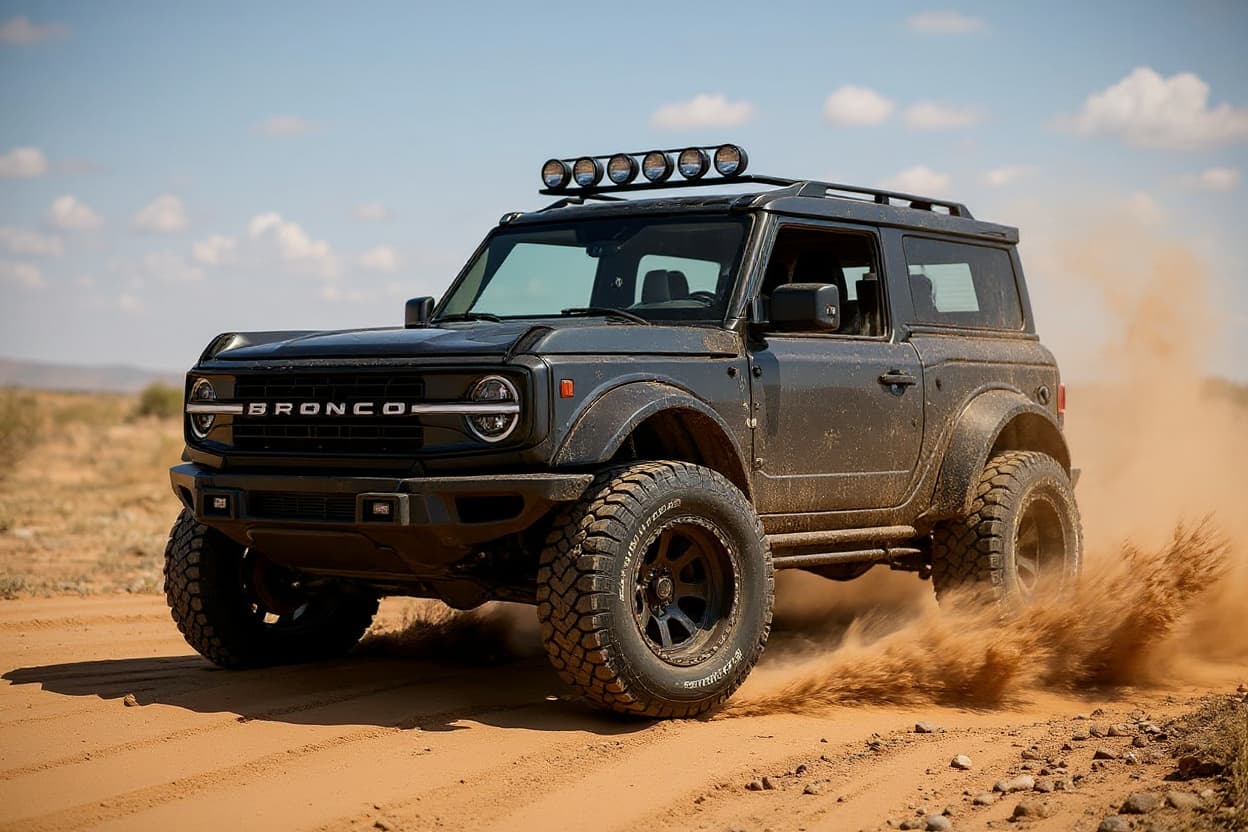
Ford Bronco lifted off-road AI render with all-terrain tires | TunedRidesAI Render

Ford Bronco

Render yours →
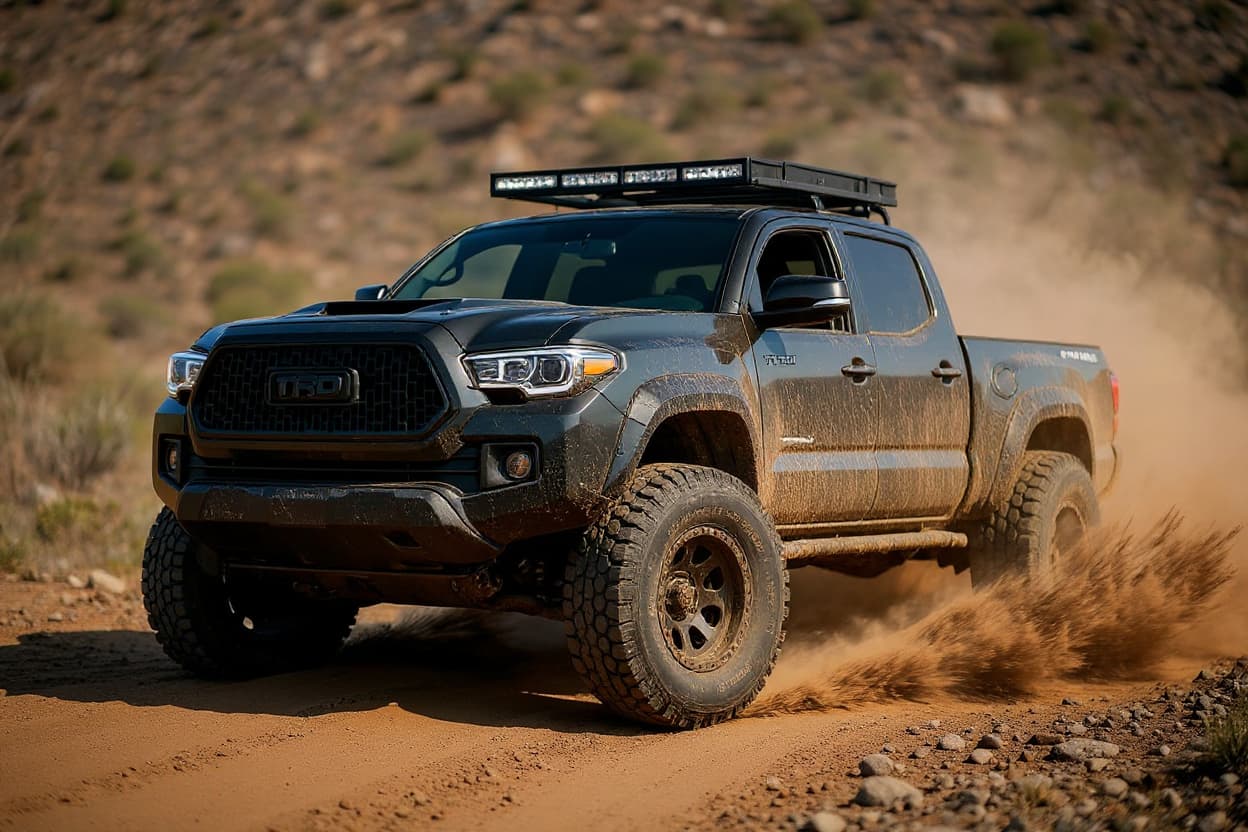
Toyota Tacoma lifted off-road AI render | TunedRidesAI Render

Toyota Tacoma

Render yours →
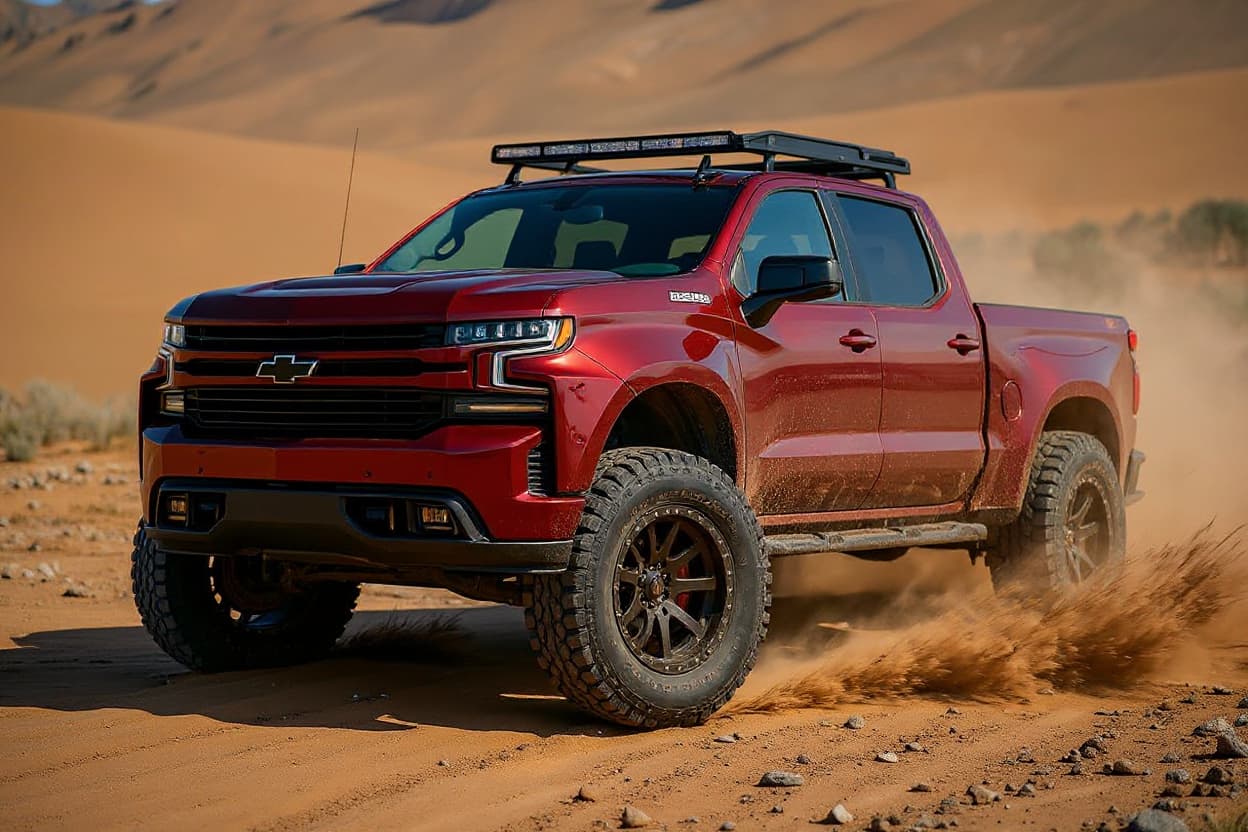
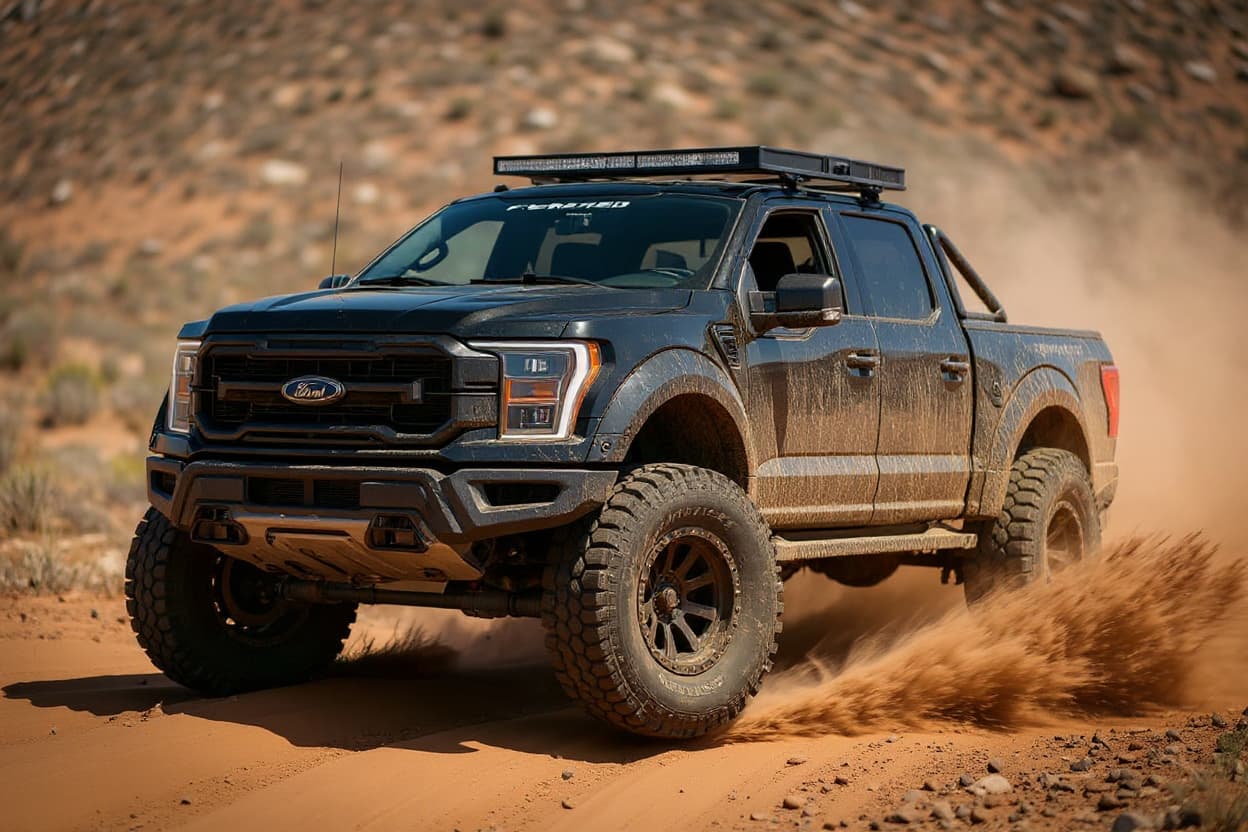
Ford F-150 lifted off-road AI render | TunedRidesAI Render
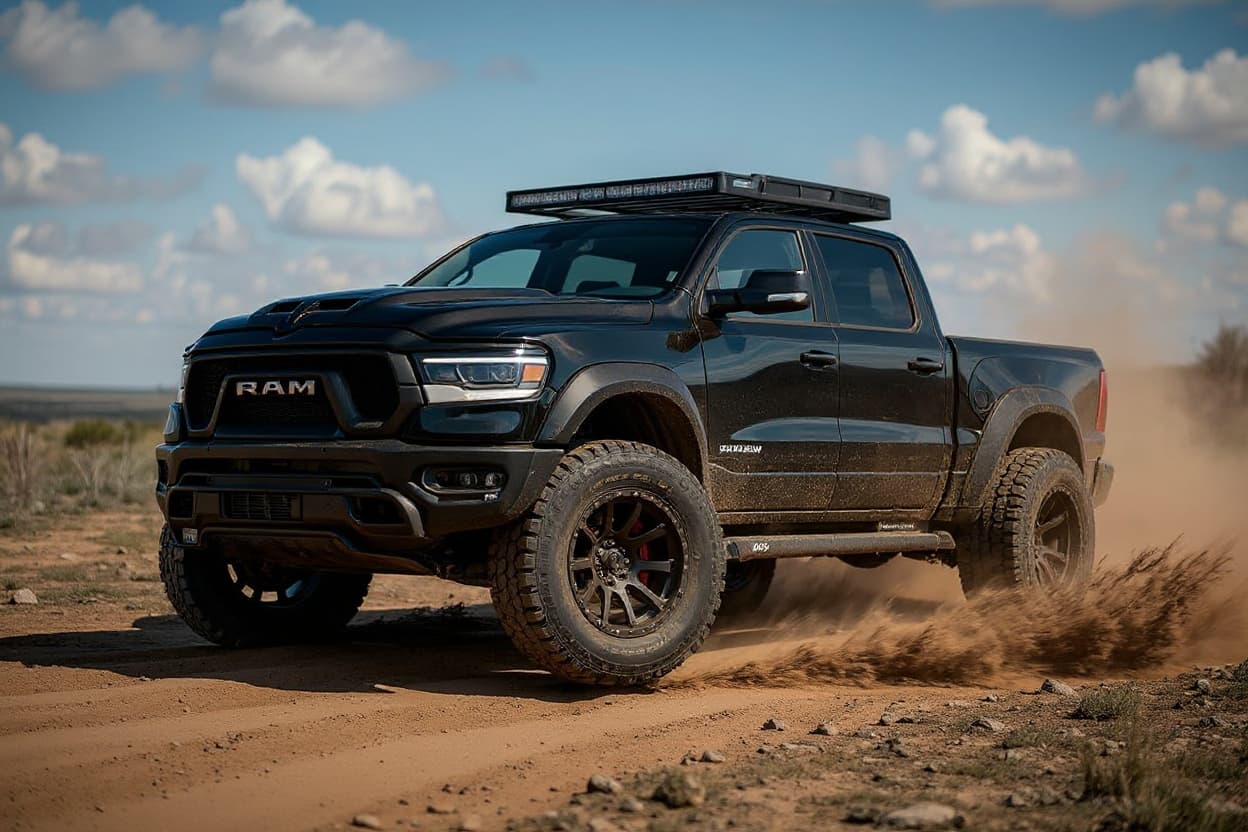
Ram 1500 lifted off-road AI render | TunedRidesAI Render
Try it on your car, free

Free tier · 3 renders/day · No credit card

What Is an Off-Road Build?

An off-road build takes a truck or SUV and adds the clearance, traction, and durability to leave the pavement. The defining hardware is a suspension lift of 3 to 6 inches, larger all-terrain or mud-terrain tires on stronger wheels, skid plates to protect the undercarriage, and recovery gear for when the trail bites back. The visual hallmarks are the raised stance, the chunky tire sidewalls, a roof rack, and a front light bar.

The culture splits into rock crawling, desert running, and overlanding. Overlanding, self-reliant long-distance travel with the vehicle as basecamp, has driven the modern boom in lifted Broncos, Tacomas, 4Runners, and Defenders kitted with roof tents, drawers, and recovery boards.

The Platforms That Define Off-Road

The off-road world has its icons, and the order matters. The Jeep Wrangler is the rock-crawling benchmark, solid axles, removable doors, and a short wheelbase that eats trails. The Toyota Tacoma and 4Runner own the overland scene on a reputation for going a quarter-million miles without complaint. The Ford Bronco returned in 2021 and instantly became the modern overland icon.

On the full-size side: the Ford F-150, Chevrolet Silverado, and Ram 1500 anchor the lifted-pickup look, while the Raptor and TRX push it to factory extremes. On the premium side: the Mercedes-AMG G63, Land Rover Defender, and Range Rover prove that luxury and a serious lift are not mutually exclusive. Builders argue about solid axle versus independent front the way drivers argue about diesel versus gas. Endlessly, with no winner.

What Goes Into a Real Off-Road Build

A proper off-road build is a stack of decisions that all have to agree. Skip any one and the truck either rubs, rides badly, or strands you on the trail:

  • Suspension lift (3–6 inches): New shocks and springs or spacers, plus corrected control arms and track bar. Fox, King, BDS, and Rough Country dominate the kit market.
  • All-terrain or mud-terrain tires: 33 to 37-inch tires (BFGoodrich KO2, Falken Wildpeak) deliver clearance and bite. Mud-terrains for the gnarly stuff, all-terrains for daily use.
  • Stronger wheels: Aftermarket wheels (Method, Fuel) in the right offset clear the lift and tires without rubbing, and survive the abuse off-pavement.
  • Skid plates and rock sliders: Steel or aluminum armor protects the oil pan, transfer case, and rockers from trail damage.
  • Roof rack and light bar: A rack carries recovery boards, fuel, and a roof tent; an LED light bar turns night trails into day. The signature overland silhouette.
  • Recovery gear: Winch, recovery boards, and tow points. The difference between a great trip and a tow truck bill.

Real Off-Road Build Costs

A clean daily-driver build: a 2 to 3-inch lift with matched shocks for $1,500, a set of 33-inch all-terrains on aftermarket wheels for $2,000, plus a leveling of expectations. You are looking trail-ready for around $4K. A serious overland rig: a 4 to 6-inch lift, 35s, skid plates, rock sliders, a roof rack, a winch, and a light bar. Call it $10K and up before the roof tent. A lift kit plus all-terrain tires, the core of most builds, runs $3,000 to $10,000 all-in.

The visualisation question is acute: lift height and tire size change the proportions of a truck dramatically. A 6-inch lift on 37s looks right on some platforms and cartoonish on others. The AI render shows you the full build on your specific truck before you drop $5K on parts that overwhelm the stance.

Overlanding vs Rock Crawling vs Desert

Three parallel scenes have grown out of the same culture. Rock crawlers prioritise articulation and clearance, lockers, big lifts, 37-inch tires, and solid axles for slow, technical terrain. Desert runners prioritise high-speed suspension travel, long-travel kits, big bypass shocks, and the Raptor and TRX factory builds. Overlanders prioritise self-reliance and comfort over distance, a moderate lift, all-terrains, a roof tent, and storage. All three are valid; all three have built their own communities. Some of the best builds straddle the line, capable everywhere without being perfect anywhere.

What Our AI Render Shows

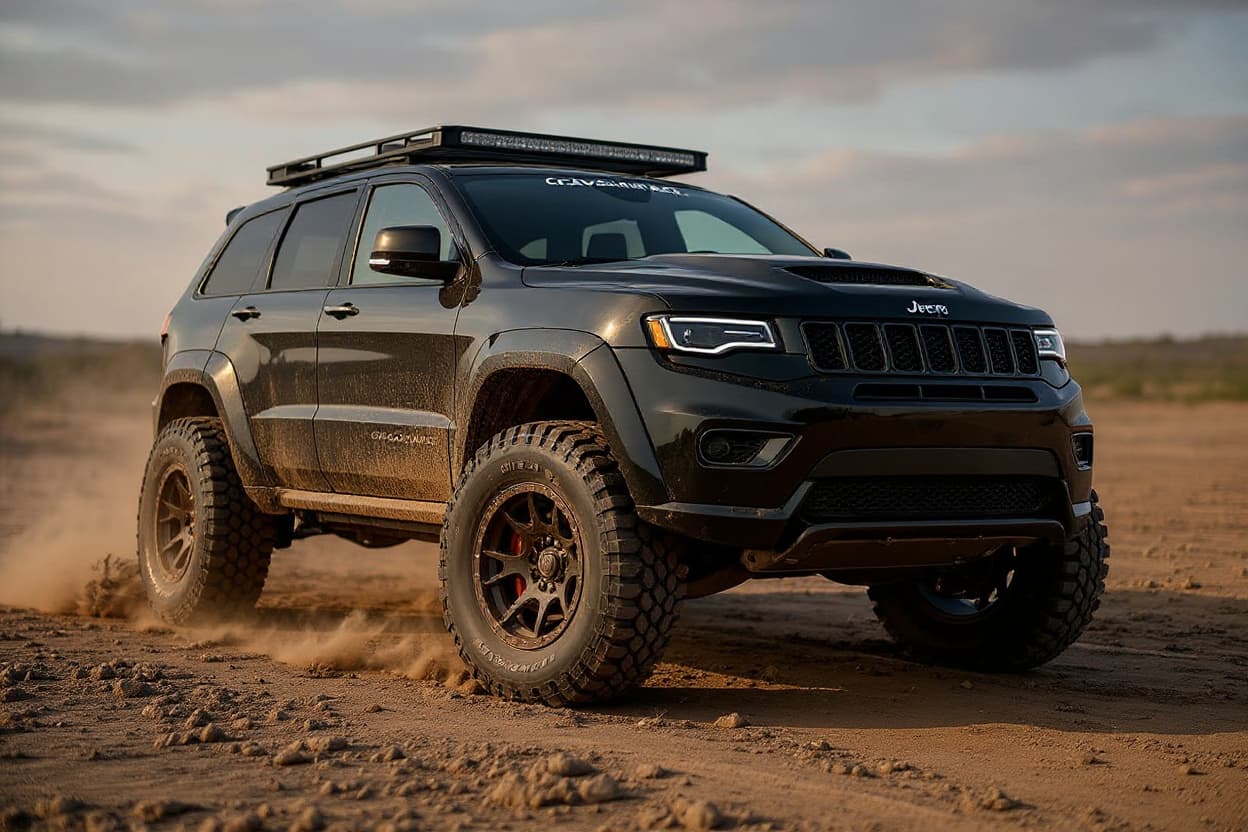
Our AI render captures the full visual transformation: a raised suspension stance, chunky all-terrain tires, aftermarket wheels in the right offset, a roof rack, and a front light bar. It is real enough to confirm whether the lifted look suits your platform, and how aggressive a lift height and tire size read right on your specific truck.

What it does not replace: the suspension shop for the install, the alignment rack, or the trail itself. Use the render to validate direction and proportions, then bring it to your installer or kit supplier as a brief. Most users find one render saves them a weekend of forum-scrolling and a wheel-offset mistake.
AI Renders

Off-road builds on 4 platforms

Every render here was generated by TunedRides AI from a single photo.

Just for Fun

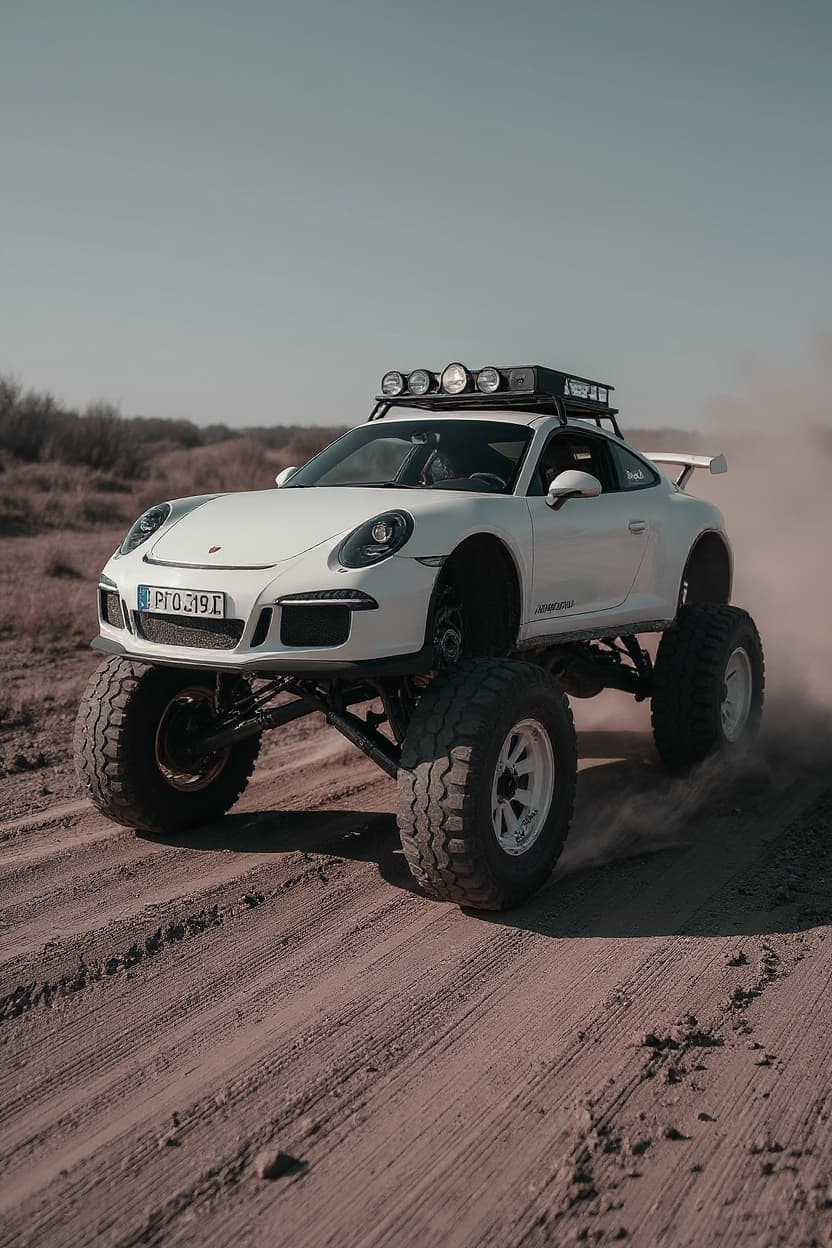
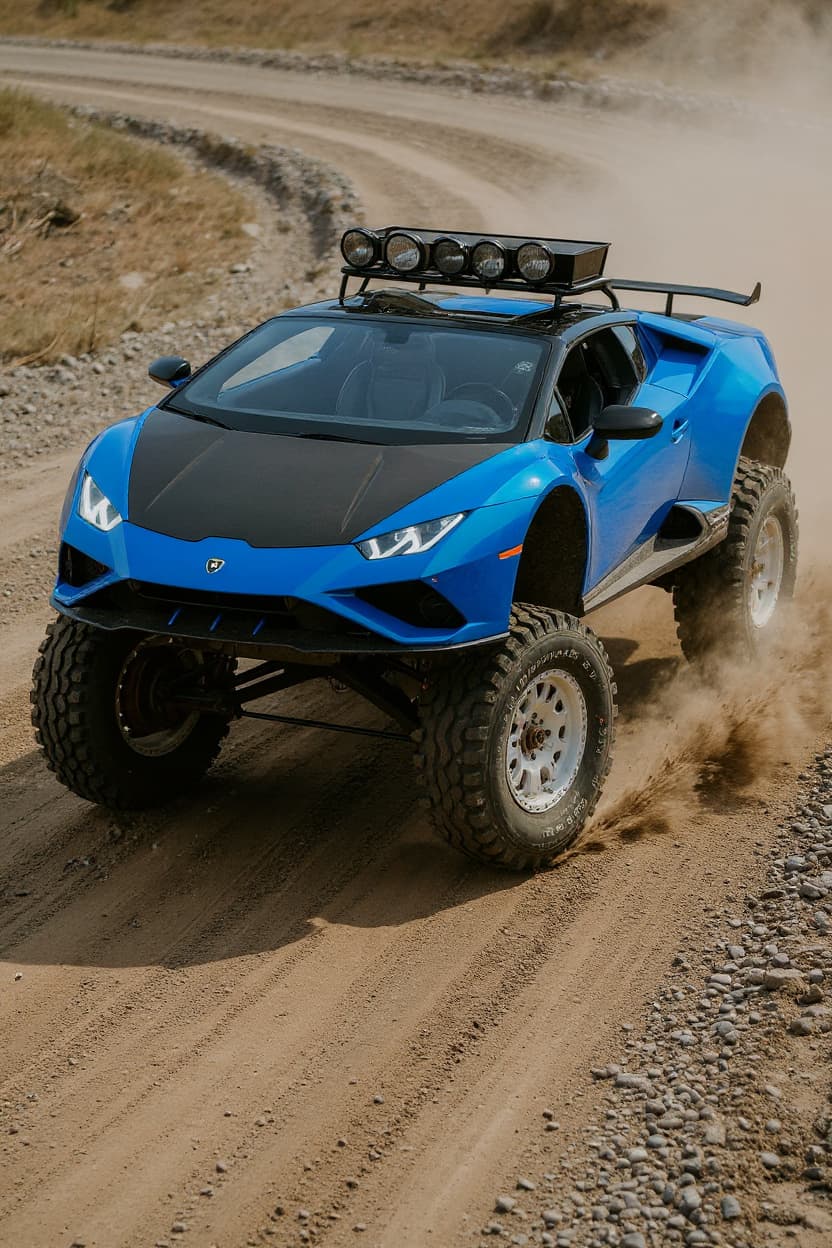
It works on anything, even a supercar

Safari-spec builds aren't just for trucks. The AI happily lifts a 911 or a Huracan too.

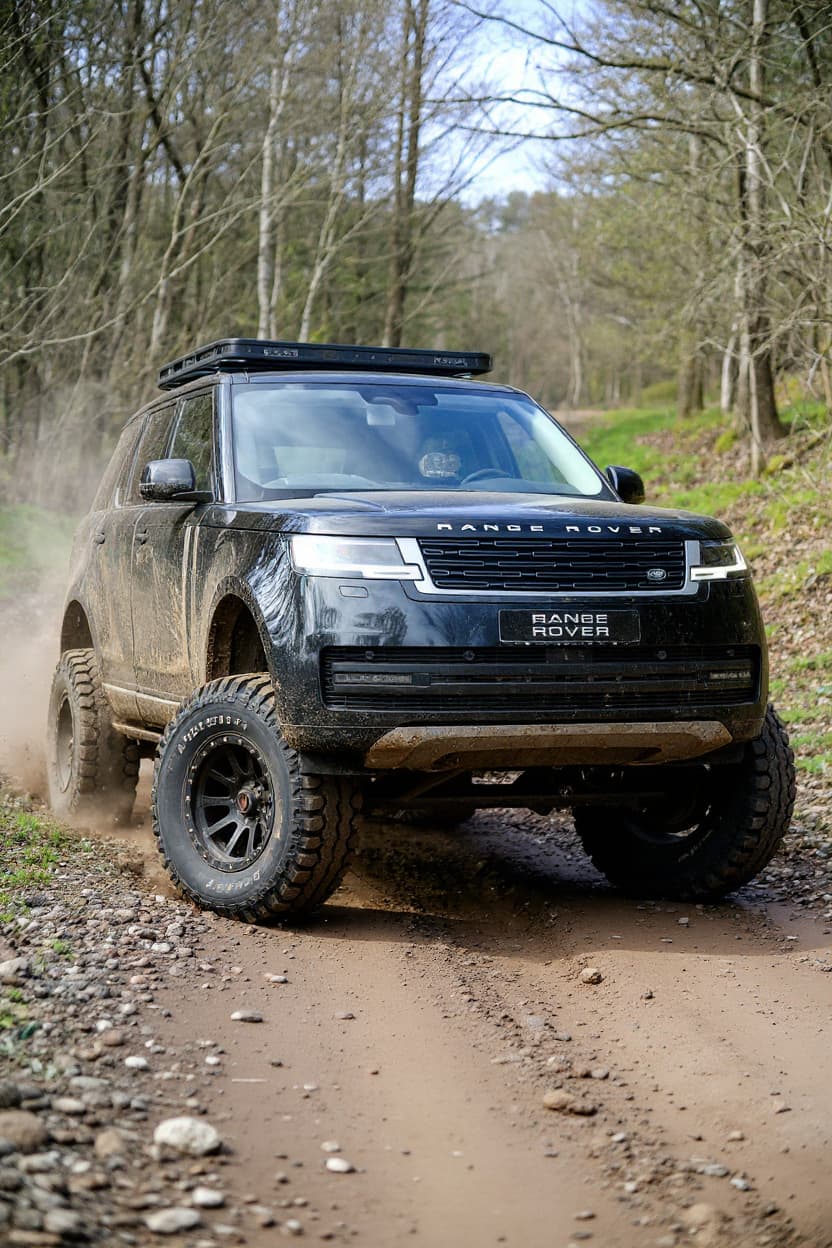
Range Rover lifted overland AI render | TunedRides

Range Rover

AI Render

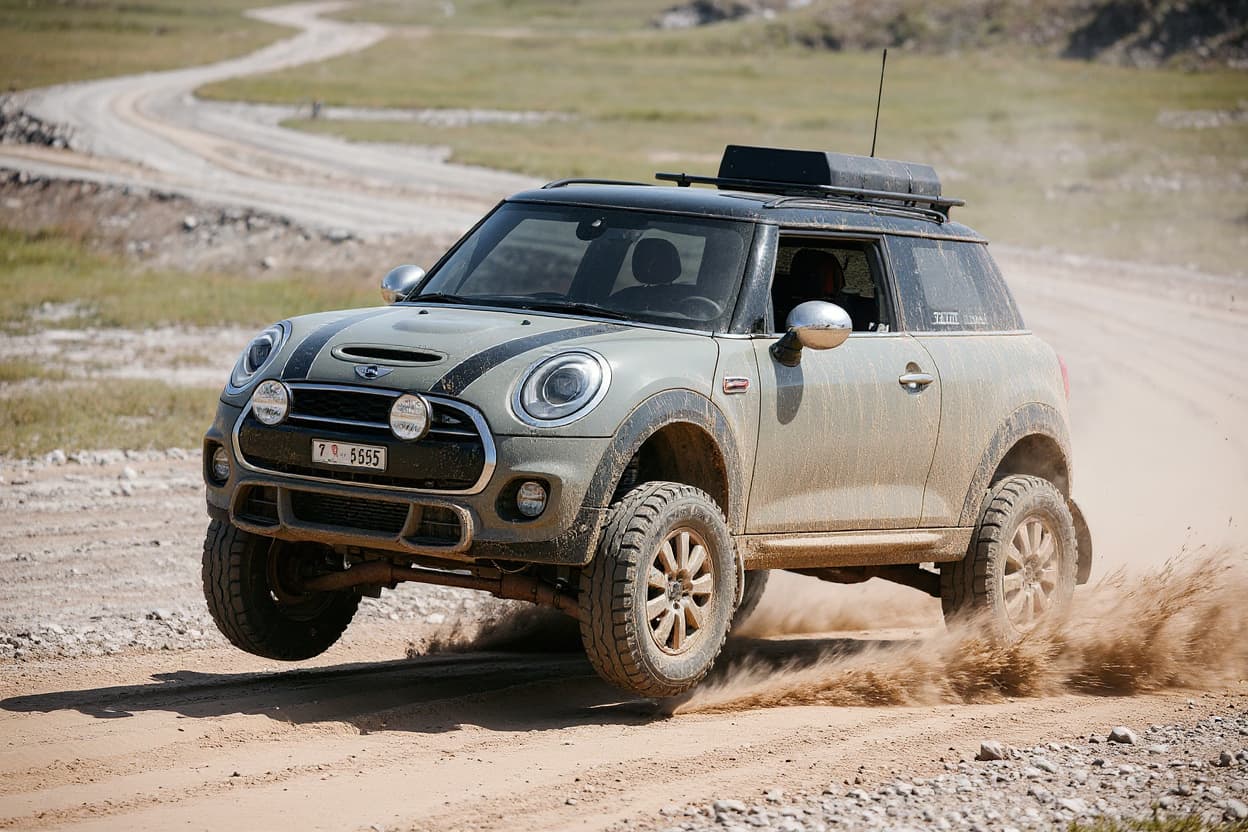
Mini Cooper rally off-road AI render | TunedRides

Rally Mini

AI Render

Porsche 911 safari off-road AI render | TunedRides

Safari 911

AI Render

Lamborghini Huracan off-road AI render | TunedRides

Off-road Huracan

AI Render

What Goes Into an Off-Road Build?

An off-road build is a layered system: suspension, tires, protection, and recovery all have to agree. Here are the six components every serious overland rig has dialed in.

Suspension Lift

3 to 6 inches of new shocks, springs, and corrected geometry. Fox, King, BDS, and Rough Country dominate the kit market.

All-Terrain Tires

33 to 37-inch all-terrains or mud-terrains (BFGoodrich KO2, Falken Wildpeak) for clearance and bite on every surface.

Aftermarket Wheels

Method and Fuel wheels in the right offset clear the lift and tires without rubbing, and survive off-pavement abuse.

Skid Plates + Sliders

Steel or aluminum armor protects the oil pan, transfer case, and rockers from rocks and stumps on the trail.

Roof Rack + Light Bar

A rack carries recovery boards, fuel, and a roof tent; an LED light bar lights up night trails. The signature overland look.

Recovery Gear

Winch, recovery boards, and rated tow points. The difference between a great trip and an expensive tow.

Off-Road Directions: Which Is Right for You?

Off-road culture splits into three directions, each with different platforms and goals.

  • Overlanding

    Moderate lift, all-terrains, roof rack, and storage. Built for self-reliant long-distance travel with the vehicle as basecamp. Bronco, Tacoma, 4Runner, Defender.

  • Rock Crawling

    Big lift, 37-inch tires, lockers, and solid axles for slow, technical terrain. Wrangler is the benchmark. Articulation and clearance over speed.

  • Desert / High-Speed

    Long-travel suspension, big bypass shocks, built to fly across open desert. Ford Raptor and Ram TRX are the factory examples of this build.

Off-Road Build Cost Breakdown

Plan realistically. A lift kit plus tires is the core, but the gear adds up fast.

Leveling kit (1–2.5 in)$100–$400
Suspension lift (3–6 in)$1,500–$5,000
All-terrain tires (set of 5)$1,000–$2,500
Aftermarket wheels (Method, Fuel)$800–$2,000
Skid plates + rock sliders$600–$2,500
Roof rack + light bar$500–$2,000
Winch + recovery gear$600–$1,800

Most Popular Off-Road Platforms

AI off-road build renders for trucks and SUVs. Click any car to see its render.

Visualize your lift before you buy a single part

A clean daily build is $4K all-in; a serious overland rig is $10K+. AI renders let you check whether your truck wears the lift and tires before you spend the first dollar.

Try it free →

Render your car lifted →

Upload your photo. See your truck or SUV as an off-road build. Free. 30 seconds.

Render your car free →

Free tier. No credit card.

Off-Road Build FAQ

Can I preview a lift before buying parts?

Yes. That's the whole point. Upload a photo of your truck or SUV and the AI renders it with a suspension lift, all-terrain tires, and overland gear so you can see the stance and proportions before you spend $3,000–$10,000 on a kit. A 6-inch lift reads very differently from a 3-inch leveling kit, and 35-inch mud-terrains change a truck's whole presence. Far cheaper to find out in a render than after the parts arrive.

Will it work on my exact truck?

If you can photograph it, the AI can render it. It handles full-size pickups (F-150, Silverado, Ram 1500), mid-size trucks (Tacoma), body-on-frame SUVs (4Runner, Bronco, Wrangler, G63, Defender), and crossovers. The closer your photo is to a clean three-quarter side angle in good light, the better the render reads. Lifted dually setups and extreme one-off fabrication are harder for any AI to nail, but standard lift-and-tire builds come out clean.

How much does a lift kit cost?

A basic leveling kit is $100–$400 installed and just raises the front to clear slightly bigger tires. A proper suspension lift, new shocks (Fox, King, BDS, Rough Country), control arms, and track bar, runs $1,500–$5,000 in parts plus install. Add a set of all-terrain or mud-terrain tires (BFGoodrich KO2, Falken Wildpeak) on aftermarket wheels (Method, Fuel) and you're at $3,000–$10,000 all-in for a clean, capable build.

What's the difference between a lift kit and a leveling kit?

A leveling kit (1–2.5 inches) only raises the front of the truck to match the factory rear rake, letting you run slightly larger tires with minimal change to geometry or cost. A suspension lift (3–6 inches) raises the entire vehicle with new shocks, springs or spacers, and corrected control arms, allowing 33–37 inch tires and real ground clearance. Lifts cost more, change ride quality, and often need re-gearing, but deliver the aggressive overland stance.

Does a lift hurt ride quality or fuel economy?

Both take a hit, the question is how much. A quality lift kit with matched shocks rides nearly as well as stock on the road; a cheap spacer lift can feel harsh and bouncy. Bigger, heavier all-terrain tires add rolling resistance and rotational mass, so expect a 1–3 mpg drop and slower acceleration unless you re-gear the axles. Overlanders accept the trade for clearance and traction; daily-driver builds usually stay closer to a 2–3 inch lift on 33s.