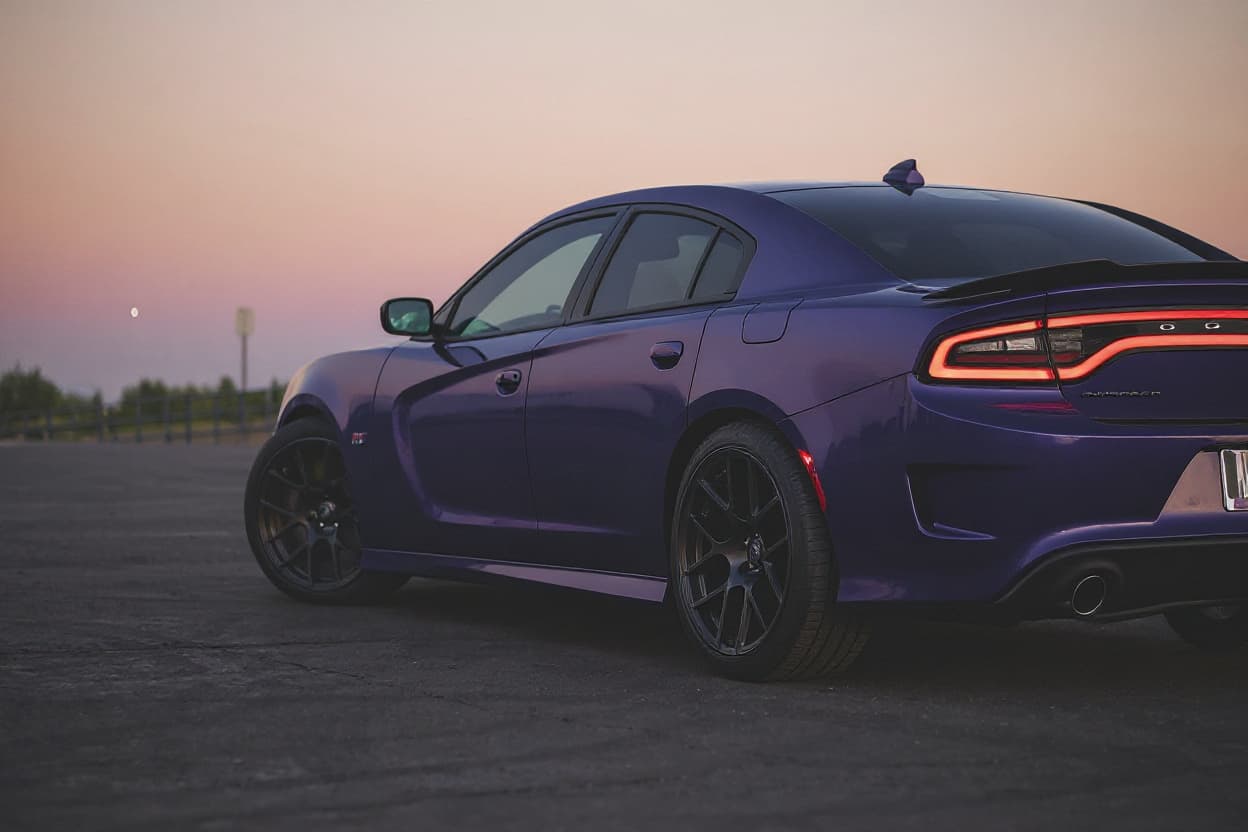
 AI render · Stance
How to Stance a Car: The Complete Setup Guide
Stancing a car correctly requires getting four variables right simultaneously: ride height, wheel offset, tire width, and camber. Get one wrong and the whole stance fitment looks off. This guide covers the technical side, the math, the measurements, and the process, so you understand why each decision matters before you spend money.
Step 1: Choose Your Suspension Setup
The suspension choice determines how low you can go and how adjustable the setup is. The three main options for a stance build:
- Coilovers (static), Adjustable threaded body coilovers let you set a fixed ride height. You choose the drop and it stays there. Budget: $700–$3,500 depending on brand and adjustability. Best for: weekend builds, track use, cars that don't need to navigate rough terrain daily.
- Air suspension, Airbags replace springs. A management system (AccuAir, Air Lift, Airrex) controls the height via switches or a phone app. Drive high, show low. Budget: $2,500–$8,000 installed. Best for: daily drivers that need the slammed look at shows but functional clearance for daily use.
- Lowering springs on OEM dampers, Budget entry point. Pre-cut springs drop the car 1–2 inches over factory dampers. Limited range, less adjustable. Budget: $150–$500. Best for: mild builds where a moderate drop is sufficient.
Step 2: Calculate Wheel Offset and Width
Offset is the distance between the wheel's mounting face and its centerline, measured in millimeters. High positive offset (e.g., +45mm) tucks the wheel deep inside the fender. Low or negative offset (e.g., +15mm or -10mm) pushes the wheel outward toward the fender lip. For a flush or slightly-poke stance, you want the wheel to sit as close to the fender lip as possible without rubbing.
The formula: Actual offset = Stock offset - (desired poke in mm). If your stock offset is ET40 and you want 20mm of additional poke, your target offset is ET20. Width matters too. Wider wheels (9J, 10J, 10.5J) fill the fender opening better than stock-width wheels and allow more aggressive tire sizing.
Step 3: Tire Sizing and Stretch
Tire stretch is a defining characteristic of hellaflush stance builds, running a tire narrower than the wheel width causes the sidewall to stretch inward, creating a distinctive taut profile. For example: a 205/40 tire on a 9J wheel. The tire's nominal width (205mm) is less than the wheel's width (228mm). The excess is made up by sidewall stretch.
Stretch reduces tire contact patch and changes handling characteristics. Most street builds use moderate stretch (1–2J over tire width) for the aesthetic while maintaining acceptable safety margins. Track builds minimize stretch for maximum grip.
Step 4: Set Camber
Negative camber tilts the top of the wheel inward. Extreme negative camber (-4° to -8°) is a visual stance element. It makes wheels tuck dramatically. It also destroys tire wear on the inner edge and reduces straight-line braking performance. Most street-driven stance builds run -2° to -3° negative camber front, -1.5° to -2.5° rear, enough for the visual effect without destroying tires or compromising safety.
Step 5: Fender Rolling and Pulling
Once you've lowered the car and widened the wheels, you'll almost certainly need fender work. Rolling the inner fender lip (bending it away from the tire path) prevents rubbing under compression. Pulling the outer fender face outward creates more clearance for wide wheels. A professional fender roller costs $150–$400 to use at a shop. Aggressive pulling can crack paint. Always have the fenders heat-treated before pulling.
Step 6: Alignment
Every lowered car needs a fresh alignment after the suspension is set. Lowering changes your geometry. Camber, caster, and toe all shift when the car drops. A standard alignment ($80–$150) sets the wheels parallel and to manufacturer spec. A custom alignment ($150–$400) lets you dial in your specific camber targets. Get the alignment after the car is at its final ride height.
Before you start buying parts, render your car at different heights and offsets using the TunedRides AI car photo editor. See the fitment on your specific car before committing to a wheel and suspension combination.
Frequently Asked Questions
How much does it cost to stance a car?
A basic coilover stance build (coilovers, wheels, tires, alignment, fender rolling) costs $3,000–$6,000. A full air suspension stance build with custom wheels runs $5,000–$12,000. Show-quality builds with custom paint and high-end air management cost $15,000–$30,000.
Is stancing a car illegal?
Extreme negative camber and tire stretch can make a car fail a vehicle inspection in states with safety inspections. Extremely low ride height that affects headlight aim or creates ground clearance below state minimums can also fail inspection. Laws vary by state. Research your local requirements before building.
What coilovers are best for a stance build?
BC Racing, Fortune Auto, and KW Suspension are the most respected brands for street stance builds. BC Racing offers the best value at $700–$1,200. Fortune Auto is the step up at $1,200–$2,000. KW V3 and V4 are the premium option at $2,000–$3,500. All offer sufficient adjustability for stance fitment.
How much camber is too much?
More than -3° front camber significantly accelerates inner tire wear and reduces braking performance. More than -4° front camber is typically a show-only setup. For a street-driven stance build, -2° to -2.5° front, -1.5° to -2° rear is the performance-appropriate range. You still get the visual effect without destroying tires.
See your car stanced before you build it. Render it free. Upload your photo or choose a stock model.
Try it free — free →No credit card required. Free tier available.