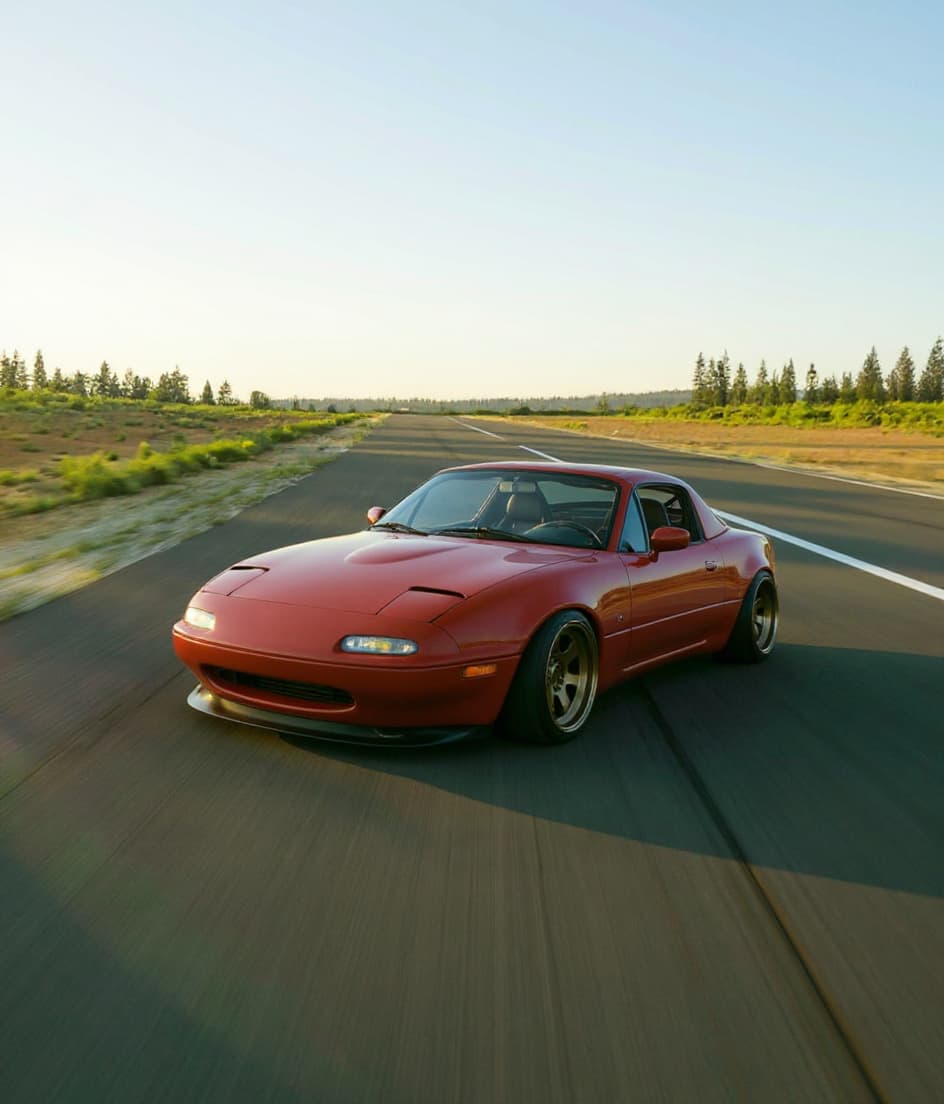
The Nissan GT-R R35 Slammed, Explained
Where stance is a fitment equation, slamming a Nissan GT-R R35 is about one thing: maximum drop. The frame runs near the ground, the fender gap goes to zero at all four corners, and the wheels tuck just inside the arches — the car should appear to sit on the road, not above it. Modern Godzilla. Liberty Walk + Rocket Bunny widebodies are canonical. A properly slammed GT-R is the build that stops foot traffic at a meet.
Real Build Cost for a GT-R Slammed
Two routes get a GT-R to slammed: air ride, or static coilovers wound to the extreme. For anything that still drives on real roads, air is the practical answer — an Airlift Performance, AccuAir, or KSPORT system ($2,500–$5,000 on most platforms) lifts the car over speed bumps and driveways, then drops it for shows and photos. Extreme static is cheaper up front, but a show-height static car scrapes on every obstacle it meets. Budget the complete slammed GT-R at $1,500–$4,500.
See it on your GT-R before ordering parts
Every GT-R has a drop that looks perfect and a drop that looks wrong, and the gap between them is smaller than you'd think. Rendering your own car slammed on TunedRides shows exactly where that line sits — before the suspension order, not after.
Upload your GT-R photo, free →See Your GT-R With a Slammed in 30 Seconds
- 1Upload a photo of your GT-R. A single clear photo works; profile angles read stance and aero changes best. JPG or PNG, up to 10MB.
- 2Select Slammed as your style. The model reads your GT-R's panels and stance and applies the style to your actual car, never a template.
- 3Download your render. You'll have the result in ~30 seconds. Free is watermarked, Pro ($14/mo or $69/yr) gives 250 HD watermark-free renders monthly — built for sharing with your shop.