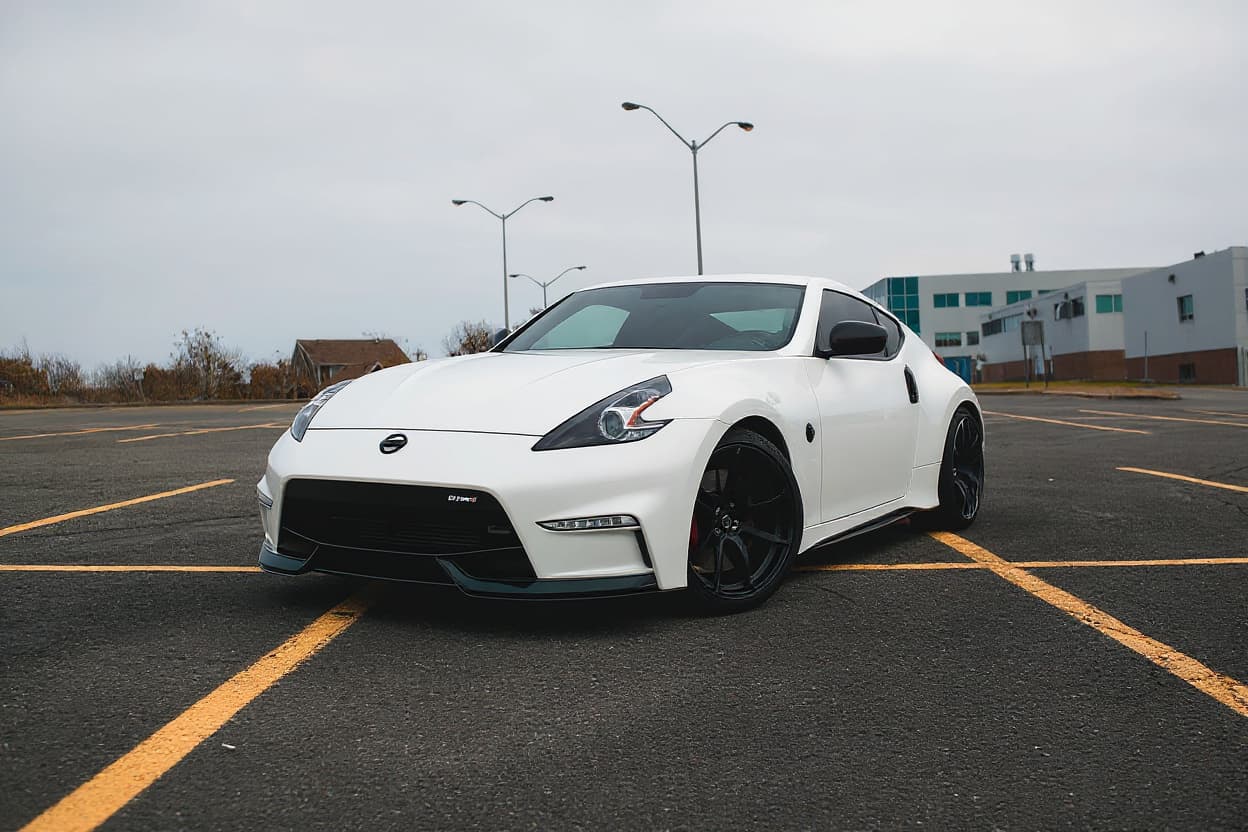
 AI render · Stance
What Is a Slammed Car? The Complete Guide to Slammed Builds
A slammed car is lowered to the extreme, often sitting at or near the ground with minimal or zero clearance between the body and road. Slammed is a subset of stance culture but emphasizes maximum drop above all else. Where a stance build balances drop with wheel fitment and camber, a slammed build prioritizes height. Or the absence of it.
Slammed vs. Stance: What Is the Difference?
The terms overlap, but there is a distinction. 'Stance' refers to the overall aesthetic of aggressive wheel fitment, low ride height, and camber setup. 'Slammed' specifically describes extreme ride height reduction. A car that is as low as physics and bodywork allow. A slammed car is almost always also a stance car. A stance car is not always slammed.
A typical stance car might have 2–4 inches of drop from stock ride height. A slammed car might have 5–8 inches of drop, placing the car's rocker panels at or near the ground. On some builds, the front bumper or rear diffuser will drag on anything steeper than a gentle incline.
How Slammed Builds Achieve Extreme Drop
- Air suspension: the most practical path to a slammed look. Air Lift Performance, AccuAir, or Slam Specialties air bags allow the car to drop to the ground when parked and raise to a driveable height when moving. This is the most common setup for daily-driven slammed builds because it is actually manageable on public roads.
- Coilovers at extreme compression: quality coilovers (KW, Fortune Auto, Öhlins) can be wound down to their minimum height setting, producing extreme static drop. The ride quality at these settings is typically poor and the suspension travel is minimal. Best for weekend-only builds.
- Custom suspension fabrication: some builders fabricate custom subframes, spindles, or lower control arms to achieve drops that standard coilovers cannot reach. This is expensive ($5,000+) and requires a skilled fabricator.
- Body modifications: rolling or pulling fenders (widening the wheel arch by rolling or pulling the inner lip outward) allows the wheel to go lower without the tire rubbing the fender. Cutting the wheel wells or modifying the inner wheel well liner achieves similar results more aggressively.
Air Suspension for Slammed Builds
Air suspension is the reason most slammed cars are daily-driveable. The system works by replacing the spring with an inflatable air bag at each corner. A compressor and management system control air pressure. Lower the pressure, the car drops. Management systems like Air Lift's 3P/3H allow height memory (the car remembers your preset heights) and smartphone control.
Entry-level air suspension kits (Air Lift 60816, Slam Specialties) start around $1,800 for the air bag components only, excluding the management system and installation. A complete air suspension build including management and professional installation runs $4,000–$7,000. Premium builds with AccuAir's e-Level management system, stainless steel lines, and custom tank fabrication can reach $10,000+.
See your car slammed before you commit to air suspension. TunedRides renders your car at show height. Free, from your actual photo.
Try TunedRides free →
Real-World Tradeoffs of a Slammed Build
- Driveways: the most immediate challenge. Most slammed builds cannot drive through a standard residential driveway without dragging the front bumper. Air suspension solves this. Raise to entry height, pull in, lower after. Static slammed builds require ramps or an extreme approach angle.
- Speed bumps: static slammed cars treat speed bumps as obstacles. Drive around them, approach at extreme angles, or damage the underbody. Air suspension allows raising for speed bumps.
- Ground clearance under the car: sump guards, exhaust systems, and suspension components can all ground out on slammed builds. Tuck everything or accept the damage.
- Oil changes and maintenance: extremely low cars require ramps or a lift for routine maintenance. Factor this into the ownership experience.
- Tire wear: extreme negative camber accelerates inner tire wear significantly. Budget for tire replacement more frequently than stock. Often 2x more often on extreme setups.
Is a Slammed Build Right for You?
If the car is a weekend show car or a car meet machine that drives 5,000 miles per year on smooth roads, a static slammed build is manageable. If the car needs to navigate daily reality, driveways, parking structures, potholes, air suspension is the only practical path to a slammed look.
See the TunedRides slammed car hub for render examples on specific platforms, and check the stance hub for related build guides.
Frequently Asked Questions
What does slammed mean for a car?
Slammed describes a car that has been lowered to an extreme degree, typically sitting at or near the ground with minimal clearance between the body and road surface. A slammed car usually has 5–8 inches of drop from stock ride height, compared to 2–4 inches for a typical stance build.
What is the best suspension for a slammed car?
Air suspension is the most practical choice for a slammed daily driver, it allows the car to be raised for driveways and speed bumps, then lowered to show height when parked. Air Lift Performance and AccuAir are the benchmark brands. Static coilovers at maximum compression work for weekend-only builds but are not practical for everyday driving.
How much does it cost to slam a car?
A basic coilover-based slammed build (coilovers, alignment, wheels) costs $3,000–$6,000. A full air suspension build costs $4,000–$10,000 installed depending on the management system. Custom fabrication for extreme static drop adds $3,000–$8,000.
Can you daily drive a slammed car?
A slammed car with air suspension can be daily driven. Raise the suspension for driveways, lower it for parking. A static slammed car (fixed height) is difficult to daily drive due to driveway challenges, speed bumps, and ground clearance issues. The practical answer is: air suspension makes a slammed car livable, static does not.
Render your car slammed in 30 seconds. Upload your photo or choose a stock model. Free, no signup required.
Try it free — free →No credit card required. Free tier available.