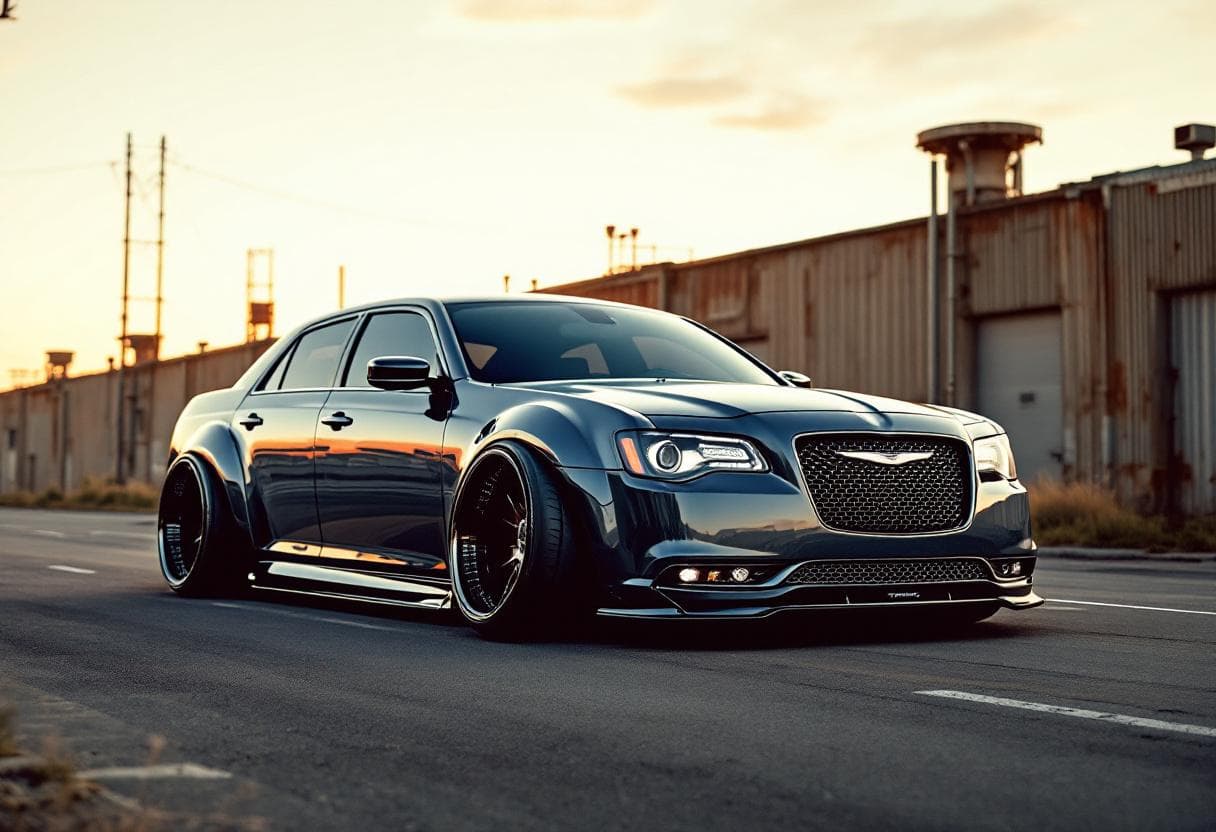
The Chrysler 300 Slammed, Explained
Slamming the Chrysler 300 takes the lowering idea to its logical end. The brief is total: frame close to the ground, zero gap between tyre and fender on every corner, wheels tucked precisely. Long sedan, gangster proportions, common widebody base in gangster/donk culture. The visual target is a 300 that reads as part of the road surface rather than a car parked on it — and when it lands, it draws a crowd at any cruise.
300 Slammed: The Cost Breakdown
The slammed 300 question is really "air or static?", and the answer decides everything downstream. Air — Airlift Performance, AccuAir, KSPORT, $2,500–$5,000 installed on most platforms — buys a car that lifts for driveways and drops to the frame when parked; it is the default for anything driven regularly. Extreme static coilovers cost less and sit lower with fewer parts, at the price of scraping through daily life. Whole-build spend lands at $1,500–$4,500.
Try it on your 300 before you spend
Every 300 has a drop that looks perfect and a drop that looks wrong, and the gap between them is smaller than you'd think. Rendering your own car slammed on TunedRides shows exactly where that line sits — before the suspension order, not after.
Upload your 300 photo, free →How to Render Your 300 With a Slammed
- 1Upload a photo of your 300. One good frame is enough; a side or three-quarter view suits stance and aero changes. JPG or PNG, up to 10MB.
- 2Select Slammed as your style. The AI maps your 300's panels and stance before rendering, so the result fits your exact car rather than a stand-in.
- 3Download your render. Results in about 30 seconds. Free tier includes a watermarked version. Pro ($14/mo or $69/yr) gives 250 HD renders a month with no watermark. Perfect for sharing with shops or builders.