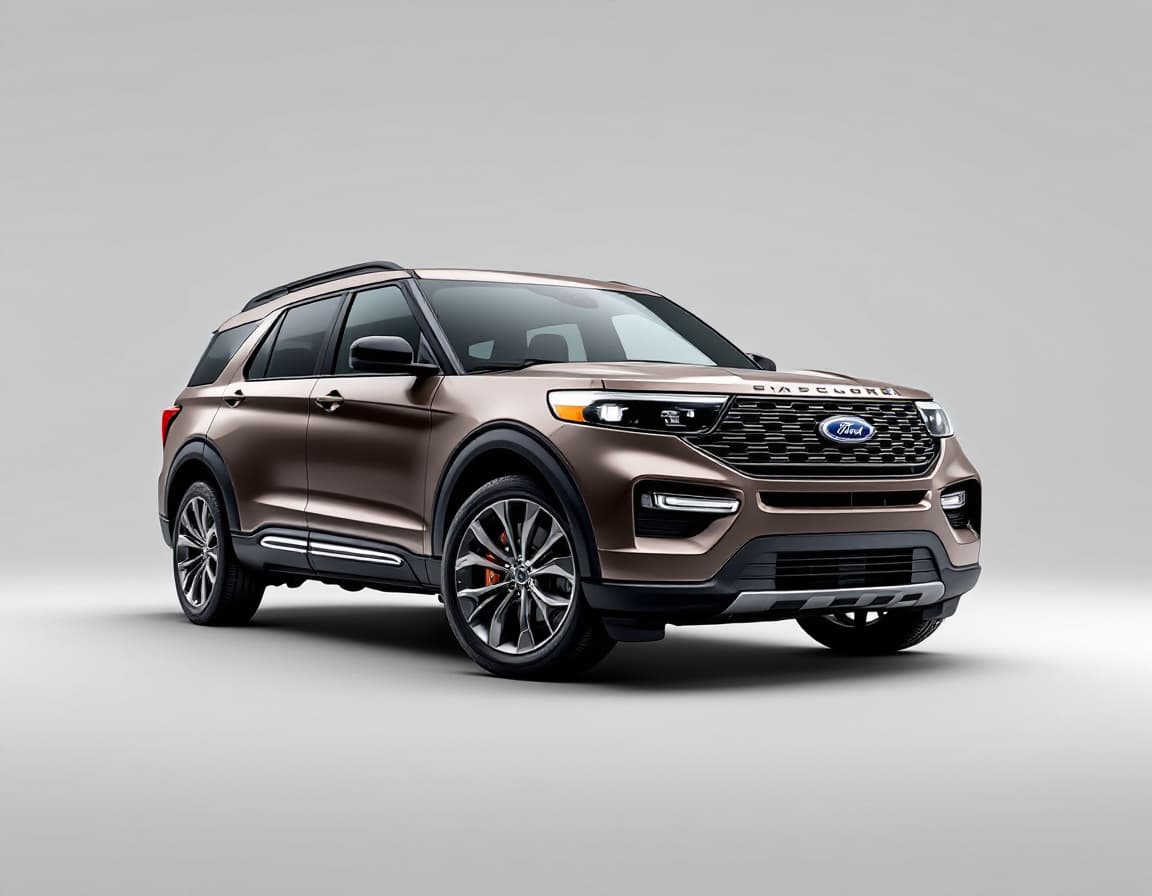
The Ford Explorer Stance, Explained
Stance on the Ford Explorer is a lowered, wheel-filled street-truck look — flush fitment and a settled ride height scaled to the body, rather than a track-car tuck. Stancing a Ford Explorer is an exercise in getting three numbers to agree: ride height as low as the hardware allows, wheel faces flush with the fender lip or just past it, and proportions that read deliberate instead of stock. When the equation resolves, the Explorer shares almost nothing visually with the car that rolled off the line — which is the whole point of the build.
Real Build Cost for a Explorer Stance
The hardware list for a stanced Explorer is short; the decisions are not. Suspension is either static coilovers ($600–$1,500 from Fortune Auto, Tein, KW V2, or BC Racing) or air ride ($2,500–$5,000 for an Air Lift 3P or AccuAir system that trades money for daily usability). Wheels do the visual work — lower offset walks the tyre out to the fender lip — and a fender roll buys the clearance the new geometry needs. Total spend on the Explorer: $800–$4,000.
See it on your Explorer before ordering parts
Wheel specs are the least refundable part of a stance build — a wrong offset on a Explorer means selling wheels at a loss and starting over. Rendering the target fitment on your actual car first is the insurance: TunedRides shows the drop, the tuck, and the flushness on your own Explorer before any part is ordered.
Upload your Explorer photo, free →See Your Explorer With a Stance in 30 Seconds
- 1Upload a photo of your Explorer. Any angle works, though a side profile gives the best result for stance and aero changes. JPG or PNG, up to 10MB.
- 2Select Stance as your style. Your Explorer's own shape guides the render, so the result is your specific car reworked rather than a generic model.
- 3Download your render. You'll have the result in ~30 seconds. Free is watermarked, Pro ($14/mo or $69/yr) gives 250 HD watermark-free renders monthly — built for sharing with your shop.