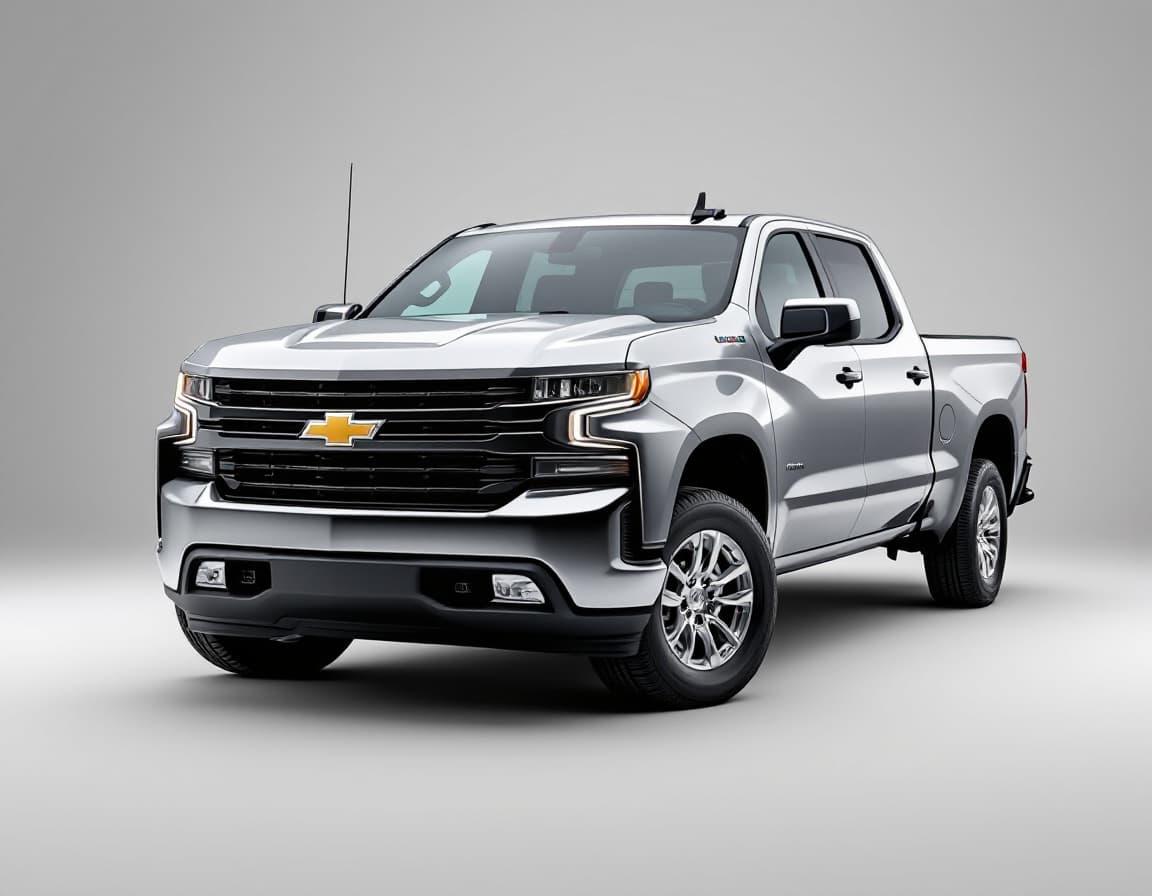
The Chevrolet Silverado Slammed, Explained
Lowering a full-size truck is one of America's oldest and most misunderstood customs. It runs straight back through the square-body and C10 scene — trucks were being dropped to the deck long before anyone thought to lift them — and the Silverado is its modern canvas. A slammed Silverado inverts everything the vehicle is supposed to be: instead of clearance and capability you get a long, low, impossibly clean profile, the bed line running level with the kerb and the wheels tucked hard into arches that were designed to sit a foot higher. It is also, worth saying plainly, the exact opposite of the squatted-truck fashion that gives lowered trucks a bad name — a properly slammed Silverado sits level or nose-down and looks composed, not broken.
What a Silverado Slammed Actually Costs
Dropping a full-size truck is a different engineering problem from lowering a car, and the vocabulary reflects it. Drops are quoted as a pair of numbers — a 2/4 or a 3/5, meaning inches at the front and rear — because a truck's front and rear suspension are completely different animals and each needs its own solution. The front typically uses drop spindles or coils; the rear uses shackles, a flip kit (relocating the axle above the leaf spring) or bags. Belltech, DJM and McGaughys are the long-established names here. The catch that surprises people is the C-notch: to get a serious rear drop the axle needs somewhere to travel, and that means notching the frame so it does not simply slam into it. That is a structural modification, and it is why a big drop costs meaningfully more than a small one. Reckon on $500–$1,200 for a modest 2/4 drop kit, and $3,000–$6,000 for a properly bagged truck with management — the latter being the only sane route if the truck still has to be a truck occasionally. Wheels are 6x139.7, and a slammed build goes wide and low-offset to fill arches that suddenly have nothing hiding in them.
See your Silverado first, then commit the money
On a vehicle this long, ride height and wheel fitment decide whether the truck reads as a clean, deliberate custom or simply as broken — and the difference is a couple of inches. Render your actual Silverado at the drop you are considering before anyone notches a frame. TunedRides does it in about 30 seconds.
Upload your Silverado photo, free →See Your Silverado With a Slammed in 30 Seconds
- 1Upload a photo of your Silverado. A single clear photo works; profile angles read stance and aero changes best. JPG or PNG, up to 10MB.
- 2Select Slammed as your style. The AI traces your Silverado's bodywork and proportions, then renders the change onto your real car, not a stand-in.
- 3Download your render. About half a minute and it's done. Free is watermarked; Pro ($14/mo or $69/yr) delivers 250 HD renders a month with no watermark, built to share.