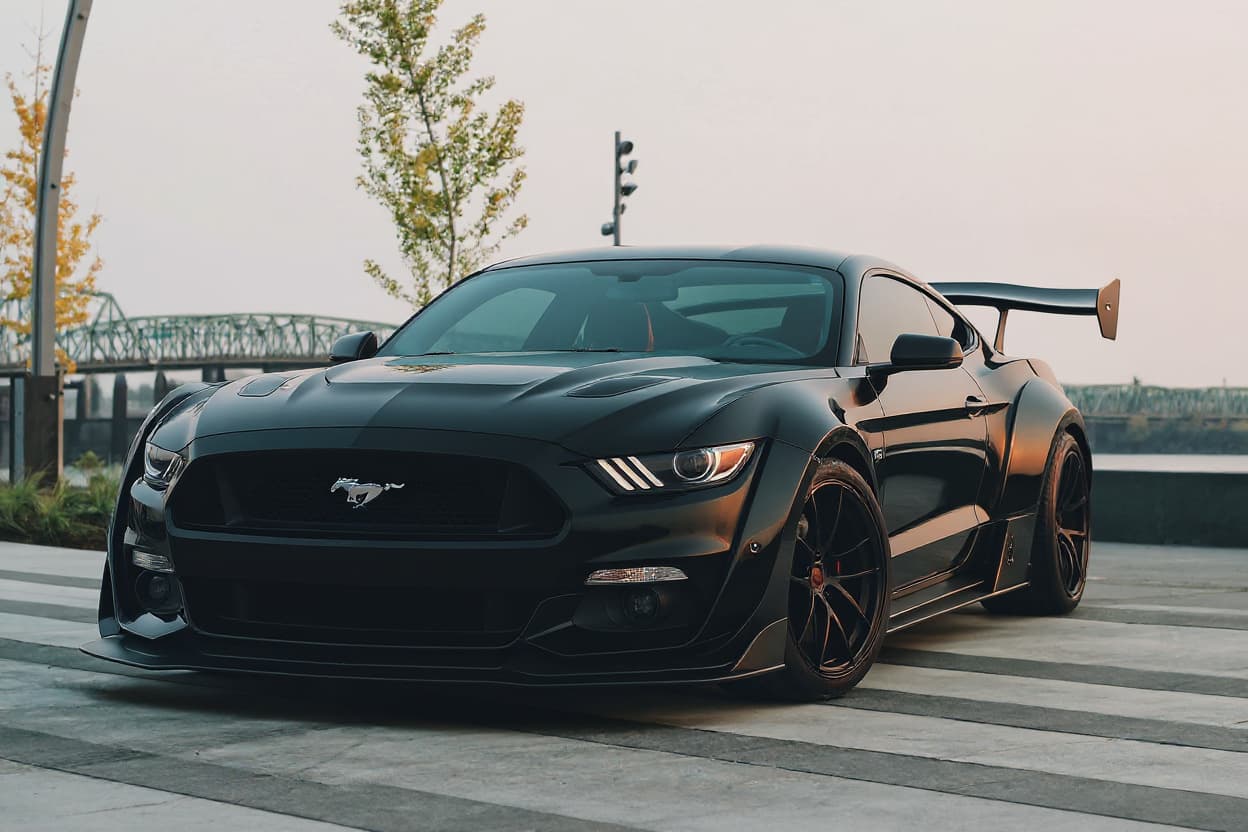
 AI render · Widebody
Hellcat Widebody: Challenger and Charger Widebody Guide
The Hellcat Widebody occupies a unique position in American muscle culture: it is the only modern production car where the factory widebody version is the aspirational configuration. Dodge's decision to release the Challenger and Charger SRT Hellcat Widebody as OEM products, with factory-flared fenders, 305mm rear tires, and a specific suspension tune for the wider track, legitimised the widebody aesthetic for an entire generation of muscle car owners. The aftermarket responded by going wider still. This guide covers every Hellcat Widebody configuration, from OEM to extreme widebody kit builds.
OEM Hellcat Widebody: What Dodge Built
- Challenger SRT Hellcat Widebody (2018–2023): The first Hellcat Widebody production car. Added +3.5 inches of total track width via factory fender flares. Rear tires: 305/35ZR20 on 20×11 rear wheels vs the narrow-body's 275mm rears. Adaptive damping suspension (Bilstein three-mode) specifically tuned for the wider track. The widebody package added approximately $6,000 to the Hellcat's price and became the bestselling Hellcat configuration by 2020.
- Challenger SRT Super Stock Widebody (2020–2023): Factory drag-pack widebody. Drag radial-ready with Pirelli PZero tires in 305/35ZR20. Launch assist and torque reserve preloading. The most power-dense factory Hellcat widebody at 807 hp.
- Challenger Jailbreak Widebody: The final expression, 807 hp, fully customisable options (previously Demon-exclusive features opened to the Jailbreak edition). Production ended with the Challenger platform.
- Charger SRT Hellcat Widebody (2021–2023): The four-door version. Same +3.5-inch flare package as the Challenger, same 305mm rears, same 6.2L Hellcat V8 (717 hp in standard spec, 797 hp in Redeye spec). The Charger widebody is the more practical daily driver version of the same aesthetic.
- Charger SRT Hellcat Redeye Widebody (2021–2023): 797 hp. The most powerful four-door production car in history when launched. The Redeye package on the widebody body is the definitive Charger configuration. Cultural peak of the LX platform.
Aftermarket Widebody Kits for the Hellcat
- SpeedKore / Carbon fiber custom kits: Full carbon body replacements for Challenger and Charger. SpeedKore's builds for celebrities (Vin Diesel's Charger builds) established the carbon widebody Hellcat as the extreme end of the market. Price: $80,000–$200,000+ for a full SpeedKore build.
- Liberty Walk (LB-Works) Challenger/Charger: Wataru Kato's LB-Works kit for both platforms adds bolt-on overfenders beyond the OEM flare width. Adds +80–100mm per side vs stock, significantly beyond the OEM widebody. FRP or dry carbon. Kit: $12,000–$20,000 before install.
- Rocket Bunny / Pandem Challenger: Kei Miura's Pandem kit for the Challenger, one of the most photographed Challenger widebody aftermarket configurations. Bolt-on flares, specific front lip, rear diffuser. Available via Voltex USA. Kit: $8,000–$14,000.
- RK Sport / DucksBody wide-arch kits: More accessible price point than LB or Pandem. FRP wide arches for Challenger and Charger in multiple width configurations. Available in the $3,500–$7,000 range.
- Widebody conversion from narrow to OEM-wide: Many narrow-body Challengers and Chargers are converted to OEM widebody appearance using genuine Mopar or aftermarket flares. Cost: $3,000–$6,000 for parts + paint.
Wheel Fitment for the Widebody Hellcat
The OEM Hellcat Widebody runs 20×9 front / 20×11 rear with 275/40 front / 305/35 rear tires. This is the baseline, the wider track accommodates a 305mm tire without rubbing at stock suspension. Aftermarket widebody builds typically push to 305–315mm rear tires on 20×11 or 20×12 wheels with +18 to +22 offset. For extreme builds on LB-Works or Pandem kits (+80–100mm), 345mm rear tires on 20×13 wheels at near-zero or negative offset are achievable. Fender rolling and lip modification are required at extreme fitments even with wide-arch kits.
How Much Does a Hellcat Widebody Build Cost?
- OEM Challenger Widebody (used, 2021–2023): $45,000–$65,000 depending on mileage and spec. The widebody OEM is the most cost-effective path to the look.
- Narrow-body to OEM-wide conversion: $3,000–$6,000 for Mopar flares + paint. Allows using a less expensive narrow-body donor.
- Aftermarket widebody kit (RK Sport / DucksBody): $3,500–$7,000 kit + $2,000–$4,000 install + $2,000–$3,500 paint matching = $7,500–$14,500 total.
- Pandem / Rocket Bunny kit: $8,000–$14,000 kit + $3,000–$6,000 install + wheels = $15,000–$25,000+ total build.
- LB-Works full build: $20,000–$40,000+ for the full kit-plus-install including paint, wheels, and alignment.
Visualise a widebody Hellcat build, OEM flares or aftermarket, before committing to any kit. The TunedRides Hellcat widebody visualizer renders your Challenger or Charger with a widebody treatment applied. Upload your own car or use the stock Hellcat model. The Challenger side specifically — factory SRT, Scat Pack Widebody, and the aftermarket kits — is compared in the Challenger widebody guide.
Frequently Asked Questions
What is the Hellcat Widebody?
The Hellcat Widebody refers to the factory widebody variants of the Dodge Challenger and Charger SRT Hellcat. Produced 2018–2023. Dodge added +3.5 inches of total track width via factory fender flares, 305mm rear tires, and revised suspension tuning. The widebody became the most popular Hellcat configuration. The Charger Hellcat Redeye Widebody (797 hp) was the most powerful four-door production car in history.
How wide is the Hellcat Widebody?
The OEM Hellcat Widebody adds approximately 3.5 inches of total track width compared to the narrow-body Hellcat. The rear wheels are 20×11 running 305/35ZR20 tires vs the narrow body's 275mm rears. Aftermarket kits (LB-Works, Pandem) push this further, adding +80–100mm per side beyond even the OEM widebody dimensions.
How much does a Hellcat Widebody cost?
A used OEM Challenger or Charger Hellcat Widebody costs $45,000–$65,000 in 2026. Converting a narrow-body to OEM-wide appearance costs $7,000–$10,000 all-in. Aftermarket widebody kits (Pandem, LB-Works) add $15,000–$40,000 on top of the base car depending on kit tier.
Is the Hellcat Widebody faster than the narrow body?
On a road course, yes. The wider track improves lateral grip significantly. On a straight drag strip, the narrow-body is marginally faster (less rolling resistance, lower weight). The widebody's advantage is in real-world performance driving where the wider rear contact patch and 305mm tires provide substantially better cornering traction and launch stability.
Render your Hellcat widebody before you build it. Free AI render. Upload your car or use the stock Hellcat model.
Try it free — free →No credit card required. Free tier available.