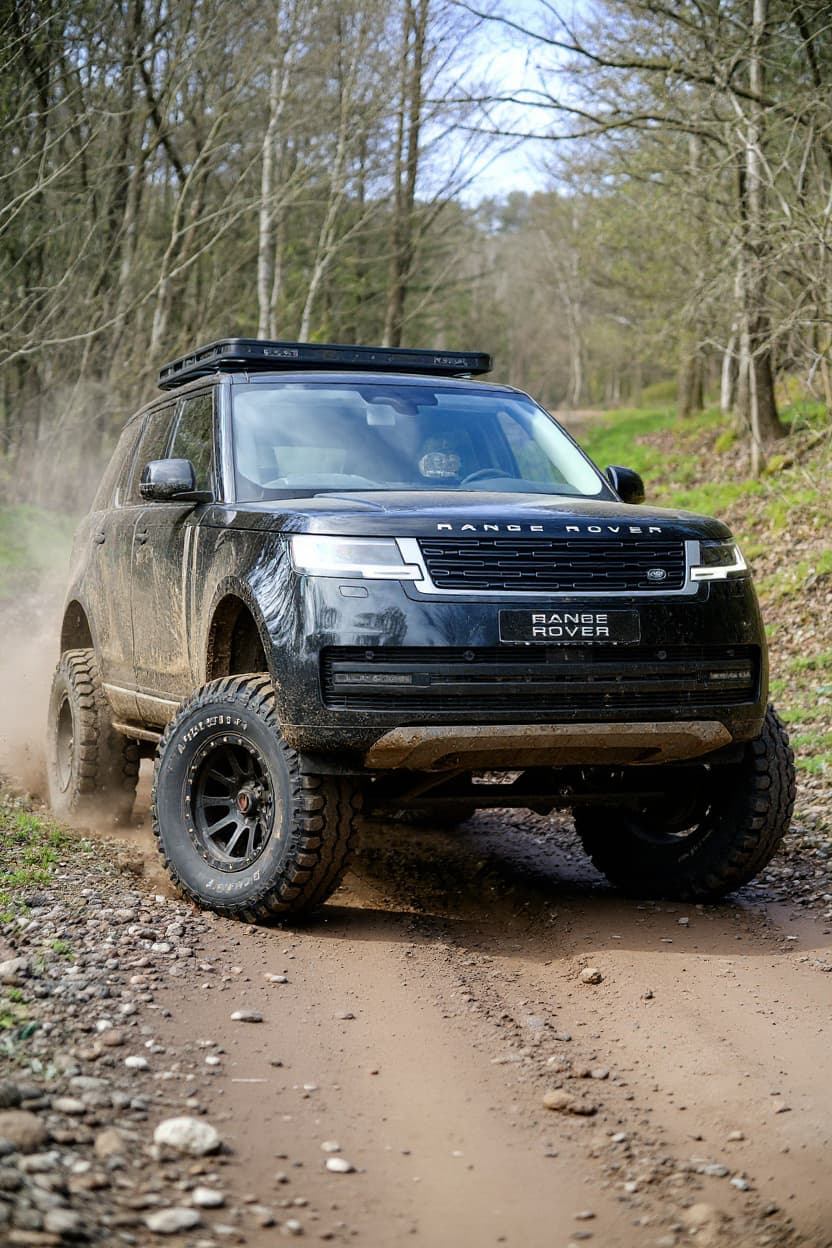
Offroad on a Dodge Durango: What Changes
Building the Dodge Durango for offroad use changes both what it can do and how it sits. A 3–6 inch suspension lift raises the body, all-terrain or mud-terrain rubber on rugged wheels fills the arches, and the Durango trades its street-spec stance for something taller, wider-tracked, and visibly ready to leave the tarmac. Three-row SUV. Hellcat trim is the donor for widebody fantasy builds. The aesthetic follows the function — extra wheel gap, tall sidewalls, and hardware that earns its place.
Budgeting a Durango Offroad Build
Three purchases define an offroad Durango build. The lift: $300–$800 for a leveling kit at the budget end, $1,500–$4,000 installed for quality long-travel or coilover setups from Fox, King, BDS, or Rough Country. The rolling stock: $1,500–$3,000 for a full set of all-terrains (BFGoodrich KO2, Falken Wildpeak) on off-road wheels from Method or Fuel. And the trail hardware — skid plates, a light bar, a roof rack — that finishes the job. All-in, expect $3,000–$10,000.
Try it on your Durango before you spend
The difference between a lifted Durango that looks factory-plus and one that looks off is in the proportions: how much lift, how much tyre, what offset. TunedRides puts the finished stance on a photo of your actual Durango first, so the build you order is the build you already know looks right.
Upload your Durango photo, free →Put a Offroad on Your Own Durango
- 1Upload a photo of your Durango. A clear shot in good light is all it needs — side-on is ideal for stance and aero changes. JPG or PNG, up to 10MB.
- 2Select Offroad as your style. The AI identifies how your Durango is shaped and transforms that, so the render reflects your real car, not an approximation.
- 3Download your render. Ready in about 30 seconds. Free renders are watermarked; Pro ($14/mo or $69/yr) gives 250 HD watermark-free renders a month for shops and builders.