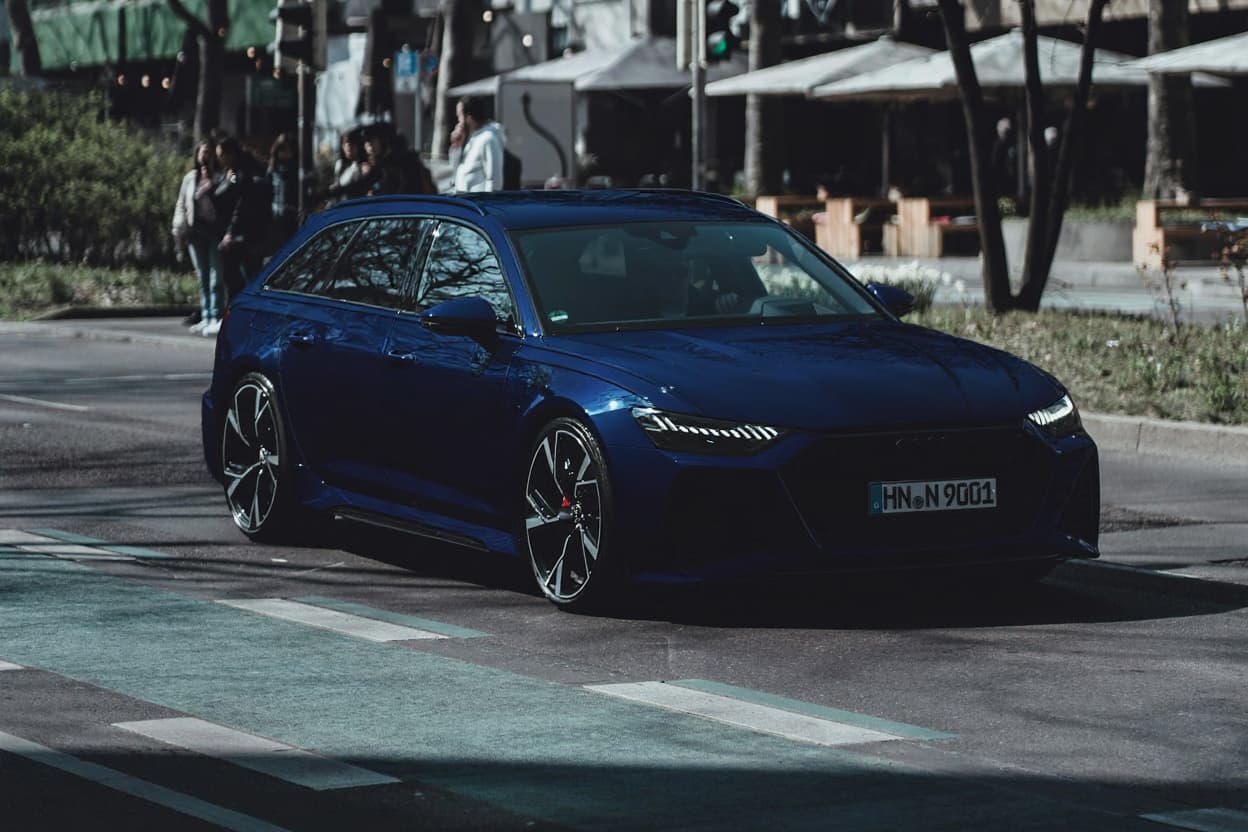
 AI render · Car Wraps
How Much Does It Cost to Wrap a Car? A 2026 Price Guide
Most full car wraps cost $2,500–$6,000 in 2026 at a reputable shop using quality cast vinyl. A compact car sits near the bottom of that range; a truck or SUV near the top; an exotic or a specialty finish like chrome or color-shift pushes well past $10,000. The single biggest variable is vehicle size, followed by the film you pick and the installer who lays it down. Below is the full car wrap cost breakdown for 2026, including a clear price table, full vs partial vs color-change pricing, and how a wrap stacks up against a respray.
How Much Does a Car Wrap Cost? (Quick Answer + Price Table)
Here is the short version. The car wrap price ranges below assume a professional mid-tier shop using cast vinyl from Avery Dennison or 3M, with proper surface prep and a solid gloss or satin color. Specialty finishes add to these figures (covered further down).
| Vehicle size | Examples | Full wrap cost (2026) |
|---|---|---|
| Compact / coupe | Civic, Corolla, GR86, MX-5 | $2,500–$3,500 |
| Sedan / sports car | 3 Series, Mustang, Charger, Supra | $3,000–$4,500 |
| Truck | F-150, Ram 1500, Silverado | $3,500–$5,500 |
| SUV / crossover | Tahoe, Grand Cherokee, X5 | $4,000–$6,500 |
| Exotic / supercar | 911, Huracán, 488, McLaren | $6,000–$12,000+ |
| Van / commercial | Sprinter, Transit | $4,500–$7,500 |
If you only remember one number, remember this: a full wrap on a typical passenger car lands around $3,000–$4,500 done properly. Anything materially below that on a full-size vehicle usually means budget vinyl, skipped prep, or both. Worth knowing where that money actually goes: the film is usually under a quarter of the bill — see car wrapping film prices for what the vinyl itself costs per square foot, brand by brand.
What Affects the Price of a Car Wrap
Two cars in the same parking lot can get quotes $3,000 apart for the same color. These are the levers that move a car wrap price up or down:
- Vehicle size and shape. A wrap is priced largely by square footage of vinyl plus labor hours. A compact uses 55–70 sq ft; a crew-cab truck uses 120–140 sq ft. Complex curves (deep bumpers, recessed door handles, mirror caps, engine covers) add hours even when square footage is similar.
- Film brand and grade. Cast vinyl from Avery Dennison or 3M is rated for roughly 5–7 years and forms cleanly around curves. Cheaper calendered vinyl (Oracal 651, unbranded films) costs a fraction as much but shrinks, lifts, and fades in 1–2 years.
- Finish type. A solid gloss or satin color is the baseline. Matte, satin metallic, brushed, carbon-texture, color-shift, and chrome each add material cost and installation difficulty (more on this below).
- Installer tier. A budget shop, a mid-tier shop, and a certified premium installer can quote the same car at $1,800, $3,500, and $5,500. The difference is prep, edge wrapping, and whether the work survives its first winter.
- Surface prep and condition. Vinyl needs a clean, smooth surface. Rock chips, peeling clear coat, rust, or aftermarket body panels mean extra prep — or make the car a poor wrap candidate altogether.
- Removing an old wrap. If your car is already wrapped, expect $500–$2,000 to strip the old film and clean off adhesive before the new one goes on.
Before you call a single shop, see the color on your actual car. TunedRides renders any wrap color or finish onto your car photo in about 30 seconds — so you walk into the quote knowing exactly what you want.
Try TunedRides free →
Full vs Partial vs Color-Change Wrap
Not every wrap is a full wrap. Matching the job to your goal is the easiest way to control cost.
Full wrap
Every painted exterior panel is covered, including door jambs and edges on a premium install. This is what the $2,500–$6,000 table above refers to. Choose it when you want a complete color change or maximum paint protection underneath.
Partial wrap
Only selected panels are wrapped — hood, roof, trunk, mirrors, or a set of stripes. Partial wraps are far cheaper because they use a fraction of the vinyl and labor:
- Hood only: $300–$600
- Roof only: $250–$500 (popular for a contrast or faux-panoramic look)
- Mirror caps: $100–$250
- Bumper (front or rear): $200–$400
- Racing stripes, full length: $400–$1,200
Color-change wrap
A color-change wrap is a full wrap whose purpose is purely cosmetic — turning a silver car satin black, or a white car midnight purple, without touching the factory paint. Pricing matches the full-wrap table, but the finish you pick drives a premium on top. A standard solid color adds nothing; a color-shift or chrome finish can add $600–$3,000 (see the finish breakdown below). If you are weighing a color change specifically, the car color change guide walks through paint vs wrap, resale impact, and color selection.
Finish premiums (on top of a solid color)
- Matte or satin solid: roughly baseline, sometimes +$200–$400
- Brushed metal or carbon-fiber texture: +$300–$600
- Color-shift / color-flip (Avery ColorFlow, 3M Color Flip): +$600–$1,200
- Chrome or mirror: +$1,000–$3,000 — the hardest film to install cleanly, and it shows every flaw in the paint underneath
Browse what each of these actually looks like on a real car in the car wrap colors guide before you commit to a premium finish.
Wrap vs Paint: Cost Comparison
The most common question after "how much does it cost to wrap a car" is whether to wrap at all or just paint it. Here is the honest cost comparison for 2026:
- Quality vinyl wrap: $2,500–$6,000 for most cars. Reversible, protects the original paint underneath, and lets you change colors again in a few years. Lasts 5–7 years with care.
- Quality respray: $5,000–$15,000 for a proper booth job with full prep, jambs, and a durable color. Permanent, can be flawless, and does not peel — but it is a one-way decision and it removes the factory finish.
- Budget respray (Maaco-tier): $1,000–$3,000. Comparable in price to a budget wrap, but typically single-stage, thin, and visibly cheaper up close. Not in the same league as a $3,500 mid-tier wrap or a real booth respray.
Rule of thumb: for a near-new car you plan to sell in a few years, a quality wrap usually wins — it is cheaper than a quality respray, reversible, and protects resale value. For a permanent, no-compromise color you will keep for a decade, paint can be worth the premium. The full trade-off (durability, finish ceiling, maintenance) is in the dedicated car wrap vs paint comparison.
How Long Does a Wrap Last?
A professionally installed wrap using cast vinyl from Avery Dennison or 3M lasts 5–7 years in a moderate climate. Budget calendered vinyl lasts 1–2 years before edges lift and color fades. Specialty films like chrome and color-shift typically run shorter, around 3–5 years. The difference between the low and high end is mostly down to film grade, install quality, and how you treat the car:
- Garage or covered parking dramatically extends wrap life versus baking in the sun daily.
- Hand washing with pH-neutral soap beats automatic brush washes, which scuff and lift edges.
- Hot, high-UV climates age vinyl faster than temperate ones.
- Quality install (edges tucked or panels pulled) resists lifting far longer than a budget tuck-and-trim job.
Because the wrap protects the paint beneath it, a 5–7 year wrap on a daily driver often pays for itself in preserved resale value. For the full lifespan breakdown by film and climate, see how long a car wrap lasts.
Preview Wrap Colors Before You Buy
The most expensive wrap mistake is not the price — it is choosing the wrong color and finding out after $4,000 and a week without your car. Matte black reads aggressive on a Mustang and flat on a crossover. A color-shift looks electric in the showroom photo and muddy in your driveway. Chrome can look incredible or cheap depending on the body lines underneath it.
This is exactly what TunedRides is for. Upload a photo of your car and the wrap visualizer renders any color or finish onto it in about 30 seconds — gloss, satin, matte, color-shift, chrome, you name it. Compare three or four directions side by side, then take the winning render to your shop as the brief. It is the cheapest insurance there is against a five-figure color regret. Try the AI car photo editor free.
Frequently Asked Questions
How much does it cost to wrap a car in 2026?
A full car wrap costs $2,500–$3,500 for a compact or coupe, $3,000–$4,500 for a sedan or sports car, $3,500–$5,500 for a truck, $4,000–$6,500 for an SUV, and $6,000–$12,000+ for an exotic — at a reputable shop using quality cast vinyl. Specialty finishes like chrome or color-shift add $600–$3,000 on top.
What is the cheapest way to wrap a car?
A partial wrap is the cheapest route to a new look — a hood is $300–$600, a roof $250–$500, mirror caps $100–$250. For a full color change on a budget, a budget shop will quote $1,200–$2,200, but that usually means calendered vinyl that lasts only 1–2 years. DIY vinyl materials run $400–$800, though the failure rate on a first full wrap is high.
Is wrapping a car worth it?
For most owners, yes. A quality wrap costs less than a comparable respray ($2,500–$6,000 versus $5,000–$15,000), is fully reversible, and protects the factory paint underneath — which helps resale value. It is worth it if you want a color change without a permanent commitment, or you want to protect a car you plan to sell in a few years. It is less worth it if you want one permanent color for the next decade, where paint can win.
Is it cheaper to wrap or paint a car?
A quality wrap ($2,500–$6,000) is cheaper than a quality respray ($5,000–$15,000) for most passenger cars, and it is reversible. The advantage disappears at the budget end — a $1,200 budget wrap is no better than a $1,200 budget paint job. From mid-tier up, wrap wins on cost, reversibility, and paint protection.
How long does a car wrap last?
A professionally installed wrap using Avery Dennison or 3M cast vinyl lasts 5–7 years in a moderate climate. Budget vinyl lasts 1–2 years, and specialty films like chrome or color-shift typically last 3–5 years. Garage parking and hand washing extend wrap life significantly.
See your wrap on your car before you spend $2,500–$6,000 on it. Free render from your photo — any color, any finish.
Try it free — free →No credit card required. Free tier available.