 AI render · Wraps
Car Wrap Ideas: 30 Designs That Work in 2026
Matte black is still the most common wrap color, but the best wrap jobs in 2026 are more considered, two-tone splits that emphasize the car's body lines, color-shift films that change appearance in different lighting, and OEM-adjacent colors that make the car look like a rare factory option. Here are 30 wrap ideas that translate well from concept to finished car.
Solid Color Wraps: Timeless Options
- Matte black: the default choice for a reason. It works on virtually any body style and ages well. Matte black on a lowered car with dark wheels reads as deliberately aggressive. Best on muscle cars, sports cars, and performance SUVs.
- Gloss white: clean and OEM-adjacent. A gloss white wrap can look factory on many vehicles. Particularly strong on Japanese performance cars (Civic Type R, GR Corolla, Supra) where white is a culturally significant color.
- Matte gray: slightly softer than matte black but equally versatile. Avery Dennison Satin Dark Gray is one of the most popular wrap films, it sits between matte and satin, looking different in every light condition.
- Satin gold: works specifically on muscle cars (Charger, Mustang, Camaro) and some luxury vehicles. Gold ages poorly when overused, limit to one section or choose a subtle metallic gold rather than bright.
- OEM factory colors: wrapping a car to match a factory color from a more expensive trim or a different manufacturer. A Challenger wrapped in BMW Individual Atlas Cedar looks factory. A Civic wrapped in Porsche Guards Red is surprising and intentional.
- Army green / military olive: extremely popular on trucks, Jeeps, and off-road builds. Matte olive green on a lifted truck reads as practical-aggressive. Avery Satin Dark Basil and 3M Matte Military Green are the benchmark films.
Two-Tone Wrap Ideas
Two-tone wraps are the fastest-growing segment in custom wraps. When the split is aligned to a body line, a feature line pressed into the door, the transition between the roof and quarter panel, the result looks intentional rather than accidental.
- Black roof / body color: the most common two-tone. Wrap the roof, pillars, and sometimes the side mirrors black while the body remains in its factory color. Works on any body style. Cost is lower than a full wrap. Just roof and mirrors is $400–$800.
- Matte body / gloss accents: wrap the full car in a matte finish but leave the hood, roof, or trunk in gloss. Same color, different sheen. The contrast in finish rather than color is subtle and reads as intentional.
- Color-split along the body line: find the feature line that runs along the door panels (almost every car has one) and split the car there. Lighter color above, darker below. This emphasizes the car's width and makes it appear lower.
- Hood wrap only: a hood in a contrasting or accent color is the most cost-effective two-tone option ($300–$500). Popular on hatchbacks and hot hatches. A black hood on a white Civic or a carbon-look hood on any car.
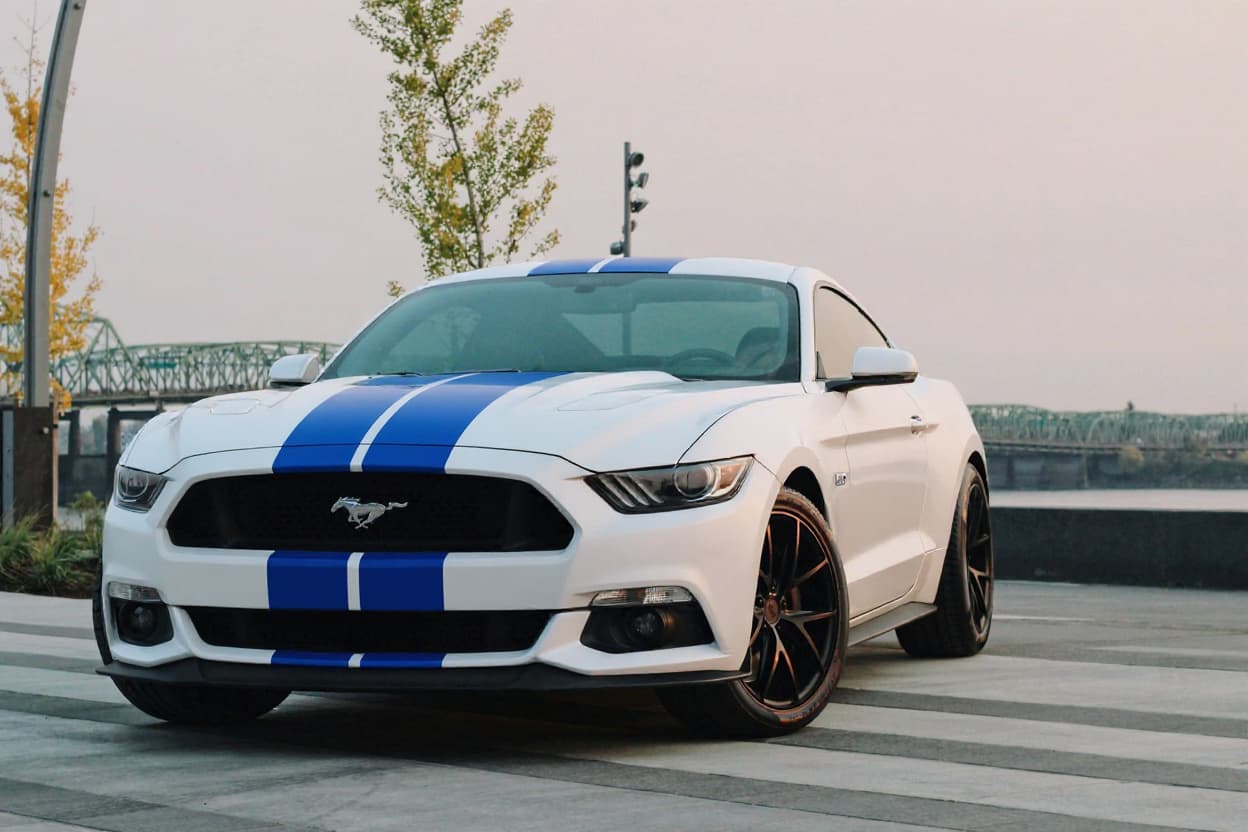
- Stripes: classic racing stripes over a full wrap. A matte black car with satin white stripes from front to rear reads as intentional and track-referenced. OEM stripe packages from Ford GT and Dodge Viper inform this aesthetic.
See any wrap color or finish on your car before you book the installer. TunedRides renders your wrap in 30 seconds. Free.
Try TunedRides free →
Color-Shift and Specialty Films
- Avery ColorFlow Shifting Sand: shifts between blue, purple, and gold depending on the viewing angle. Best on cars with complex body lines, a Mustang or a Charger where the panels catch light from multiple angles.
- 3M Color Flip: similar color-shift technology. 3M's Gloss Flip series has become popular on luxury cars. The effect is maximized on cars with large, flat panels, sedans and coupes show the shift more dramatically than SUVs with complex surface styling.
- Brushed aluminum: Avery's Brushed Titanium series wraps in a finish that resembles machined aluminum. Strong on German performance cars (M3, RS5, AMG variants) where industrial materials fit the performance brand image.
- Gloss flip psychedelic: an intense multi-color shift. Best limited to hoods, roofs, or accent panels, a full car in an extreme color-shift film can look overwhelming.
- Chrome: the most technically demanding wrap. Chrome vinyl shows every surface imperfection and is the hardest to install without visible seams. Best executed on flat-paneled vehicles by certified installers. A chrome Rolls Royce or Ferrari is a show-car statement.
- Satin chrome or brushed gold: a less aggressive alternative to mirror chrome. Satin chrome has a brushed quality that reads as premium rather than theatrical. Particularly strong on luxury SUVs (Bentayga, Cullinan, Urus).
Wrap Ideas by Vehicle Type
- Sports cars / coupes: matte finishes maximize the body line drama. Color-shift films show well on the complex surfaces. Two-tone hood/body splits are common. Strong choices: matte gray, matte blue, gloss white, Avery Satin Metallic.
- Muscle cars (Charger, Challenger, Mustang): bold, saturated colors work. Matte orange, gloss red, midnight purple, olive green. Racing stripes in a contrasting finish amplify the muscle car aesthetic.
- Luxury sedans and SUVs: OEM-adjacent colors that could be mistaken for factory. Satin finishes read as premium. Brushed or metallic finishes align with the brand image of German luxury brands.
- Trucks and off-road: military colors (olive, tan, camo), matte black, or earth tones. High contrast details (black handles, matte accents on chrome trim) emphasize the utilitarian aesthetic.
- JDM and import performance: factory Japanese colors (Championship White, Bayside Blue) or classic Japanese race liveries (Takata Racing livery on a Civic, Mugen Motorsports color scheme on an EK). Reference real race cars.
The Four Rules That Decide Whether a Wrap Idea Works
A list of 30 ideas is only useful if you know why an idea lands on one car and falls flat on another. Almost every wrap that disappoints breaks one of these four rules — and all four are things you can check before you spend a penny.
1. Finish decides whether your body lines show up or vanish
This is the rule people learn too late. A gloss or metallic finish reflects its surroundings, so every crease, shoulder line and haunch catches a highlight — the car's shape is drawn for you. A matte finish reflects almost nothing, so it flattens the same surfaces into a single mass. On a car with dramatic sculpting (a C7 Corvette, an F-Type, a Supra), matte can quietly erase the exact lines you bought the car for. On a slab-sided, plain-bodied car, matte is flattering — it reads as intent rather than absence. Before you commit to matte, look hard at what your car's lines are actually doing, because matte will hide them.
2. A two-tone split must land on a line the car already has
Two-tone is the strongest trend in wrapping and the easiest to get wrong. The rule is simple: the split has to follow something structural — a panel gap, a character line, the belt line, the A-pillar. A colour break that lands mid-panel, with nothing underneath it, does not read as a design choice. It reads as a mistake, or as damage. This is why the black-roof-over-body split is so reliable: the roof is already a discrete surface with real edges, so the eye accepts the break.
3. Colour-shift needs curvature to do anything at all
Colour-shift (chameleon) film works by changing hue with viewing angle, which means it only performs where the surface turns away from you. On a curvy, complex body — a bulging arch, a rounded bonnet, a domed roof — a single panel can show two or three colours at once, and the effect is spectacular. On large flat panels it has almost nothing to work with and collapses into one slightly odd colour. That is precisely why colour-shift is a supercar and coupe idea, and precisely why it is usually a poor choice on a van, a box truck or a slab-sided saloon. The film is not worse on those vehicles; the geometry simply gives it nothing to do.
4. The wrap is not the only colour on the car
A wrap idea is never judged alone. It sits next to your wheels, your calipers, your window trim and your badges, and those don't change when the film does. A colour that looked resolved on screen can fight with bronze wheels, or die next to a car's worth of bright chrome window surrounds. This is why a chrome delete — wrapping the bright trim in black or a matching film, typically $300–$600 — is the single most common companion to a colour change, and why it so often makes an average wrap idea suddenly look finished. Decide the wheels, the trim and the film together, not one at a time.
Wrap Ideas That Flatter a Render and Disappoint in Person
Worth being straight about, because we make renders for a living. Some ideas photograph far better than they live:
- Chrome. Stunning in a controlled photograph, relentless in daylight. It mirrors everything around it — car parks, hedges, other traffic — so the car's own shape can disappear into a puddle of reflections. It also shows every imperfection in the surface beneath and in the install, and it is the most expensive film to buy and the hardest to lay.
- Very dark matte on a dirty-road climate. Matte black hides body lines and shows dust, water spotting and fingerprints more readily than gloss, and it cannot be polished — you cannot buff a matte finish back. It looks incredible for a week and demands real discipline thereafter.
- Busy multi-colour liveries on a curvy car. A graphic that is balanced on a flat mock-up wraps around an arch, crosses a door seam and vanishes into a mirror. Liveries want relatively flat, simple flanks — which is why they work so well on race cars and commercial vans and so rarely on a curvaceous coupe.
- Neon and highly saturated colours. They read as bold on a screen and as loud in a supermarket car park. Not a reason to avoid them — just a reason to see them on your car, in daylight, at your car's size, before you decide.
Which is the entire argument for previewing rather than imagining. Use the car wrap visualizer to see any of these ideas on your specific car, and car wrapping film prices for what each finish costs per square foot — chrome and colour-shift are several times the price of a standard gloss.
Frequently Asked Questions
What is the most popular car wrap color?
Matte black is consistently the most popular car wrap color. It works on virtually every body style and ages well. The trend in 2026 is toward two-tone wraps (black roof over a body color), color-shift films on luxury vehicles, and OEM-adjacent satin colors that look factory.
How much does a car wrap design cost?
A solid color full wrap costs $2,000–$5,000 depending on vehicle size and installer quality. Specialty films (color-shift, chrome) add $600–$3,000 in material cost. Partial wraps (hood, roof, stripes) cost $300–$800. Design and graphics (custom patterns, racing liveries) add $200–$1,500 for the design work.
What car wrap looks the best?
The best car wrap is one that aligns with the car's body style and your intended aesthetic. Two-tone wraps that follow factory body lines look the most intentional. Matte finishes maximize the drama of sports car body lines. Color-shift films work best on vehicles with complex panel surfaces. See your car in any wrap finish with TunedRides before you commit.
How long do car wraps last?
A quality wrap using Avery Dennison SC900 or 3M 1080 vinyl, professionally installed, lasts 5–7 years in moderate climates. Specialty films (chrome, color-shift) may have shorter lifespans. Typically 3–5 years. Garage storage and hand washing extend wrap life significantly.
See your wrap idea on your actual car in 30 seconds. Any color, any finish. Free to try.
Try it free — free →No credit card required. Free tier available.