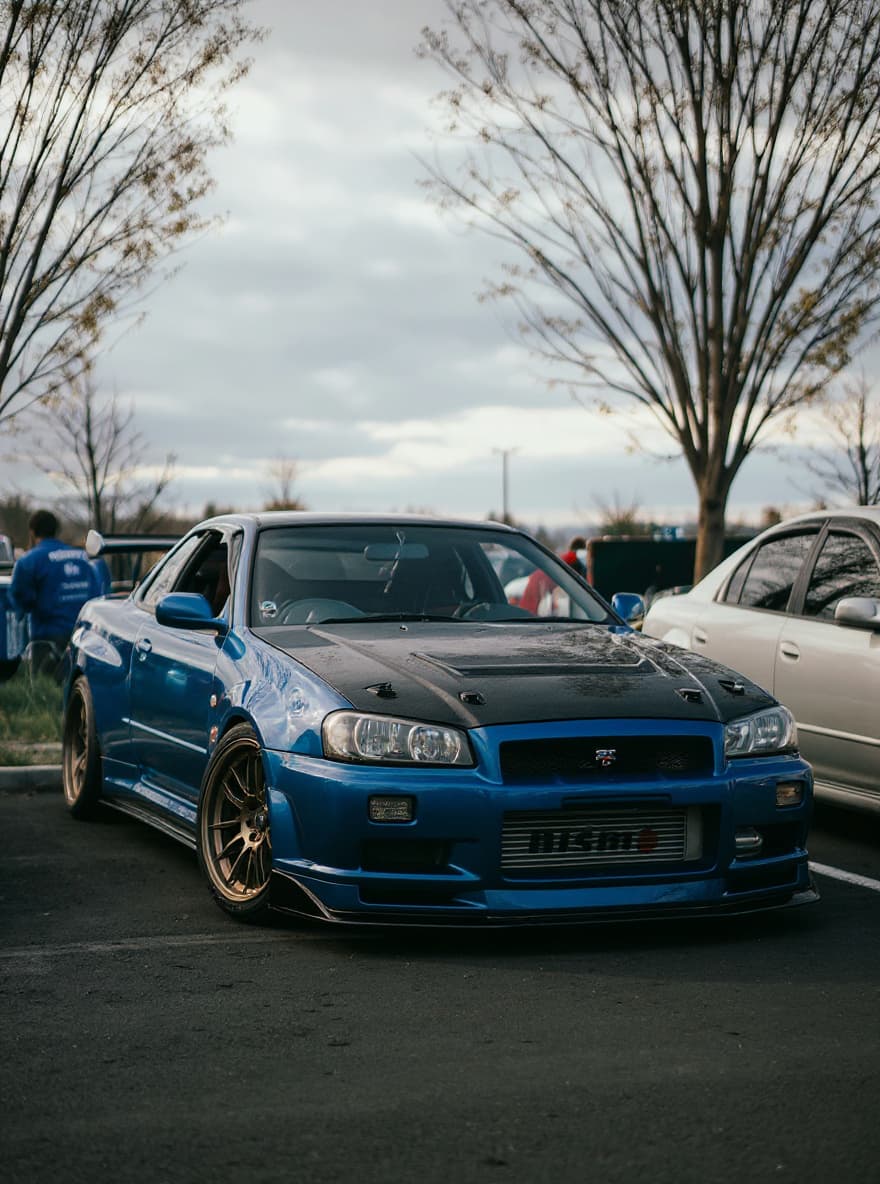
 AI render · JDM
Best Cars for JDM Style: Which Platforms Build Most Authentically
JDM style is culturally specific, some platforms are intrinsic to the aesthetic, others fight it regardless of how much money goes in. A build that ignores the cultural context of the platform looks like parts thrown at a car. A build that understands the platform's lineage looks correct at any budget level. Here are the cars that work best for JDM-style builds, and what makes them work.
Tier 1: The Canonical JDM Platforms
- Nissan Skyline GT-R (R32, R33, R34): the most internationally recognized JDM platform. The RB26DETT engine, all-wheel drive ATTESA system, and Group A racing heritage make it the pinnacle of 1990s JDM engineering. The R34 V-Spec II is the most valued variant. Authentic JDM builds on the GT-R require period-correct parts, Volk wheels, Mine's or Trust/GReddy engine work, and Nismo suspension.
- Toyota Supra A80 (JZA80): the 2JZ-GTE engine's aftermarket support is legendary, 1,000hp on a stock block is achievable. The MKIV Supra has been a tuner icon since the 1990s. JDM builds on the A80 pull from TRD, TOM'S, and GReddy parts. The A90 GR Supra is a current platform with growing JDM support from TRD and Pandem.
- Mazda RX-7 FD (FD3S): the 13B rotary engine and the car's exceptional weight balance define its character. JDM builds pull from RE Amemiya and Mazdaspeed parts. The weight savings from the rotary make the FD an exceptional chassis for suspension and aero work. Veilside's Fortune wide-body (as seen in Fast & Furious Tokyo Drift) is the most recognized kit.
- Toyota AE86 Corolla (Trueno / Levin): Keiichi Tsuchiya's car, the spiritual foundation of drift culture. 4A-GE engine with TRD camshafts and carburetors, Cusco suspension, and Recaro seats define the classic build. The cultural weight of the AE86 in JDM history is unmatched.
- Nissan Silvia S13, S14, S15: the drift platform of choice globally. The SR20DET engine, the clean body lines, and the vast aftermarket make the S-chassis the accessible JDM canon for most enthusiasts who can't afford GT-Rs or FDs.
Tier 2: Strong JDM Build Platforms
- Honda Civic (EK, DC, EG): dominant in the JDM tuner scene of the 1990s through their association with USDM import culture. Spoon Sports and Mugen parts define the authentic Civic JDM build. The EK9 Civic Type R is the most valuable version.
- Toyota Chaser JZX100: the street racer's luxury sedan, a 1JZ-GTE turbocharged inline-six in a full-size RWD Japanese sedan. Popular in VIP builds and the Japanese highway cruiser scene. Rare enough outside Japan to have significant cool factor globally.
- Subaru Impreza WRX STI: iconic in the rally scene globally. JDM-specific parts from Cusco, HKS, and Blitz define the build direction. The GC8 and GD body styles are the culturally richest variants.
- Mitsubishi Lancer Evolution IV–IX: the WRX's eternal rival. The 4G63 engine, the MIVEC system on later variants, and the Evo's rally heritage give it legitimate JDM credibility. Ralliart and Tomei Powered define the build direction.
- Toyota GR86 / Subaru BRZ (ZN8/ZD8): the current affordable JDM sports car. Pandem and Rocket Bunny both support the platform heavily. The GR86 is the contemporary entry point into the JDM tuner scene.
What Makes a Platform Authentically JDM
Authenticity in a JDM build comes from three sources: the platform's cultural history in Japanese motorsport and tuning, the availability of JDM-market parts from Japanese houses, and the visual grammar of the build (wheels, aero, interior elements) being consistent with the platform's era and community. A car with no Japanese motorsport history can be given a JDM aesthetic treatment, but it reads differently from a platform that earned its cultural position through actual competition use.
See your car in JDM style before researching parts. TunedRides renders the JDM aesthetic on any platform. Free in 30 seconds.
Try TunedRides free →
Frequently Asked Questions
What is the best JDM car to build?
For build potential and cultural authenticity, the Nissan S-chassis (S13/S14/S15 Silvia) is the most accessible. For engineering ceiling, the GT-R R34. For rotary culture, the FD RX-7. For rally heritage, the Evo IX or WRX STI. The best JDM car to build is the one whose cultural lineage matches the direction you want to take the build.
Can a non-Japanese car be built in JDM style?
Yes, and many builds do this well. The visual vocabulary of JDM style, Volk wheels, Origin Lab or Pandem aero, Bride seats, TRD-inspired liveries, can be applied to non-Japanese platforms. The result is more aesthetic than culturally specific, but within car culture this is accepted and often produces striking results, particularly on sports coupes with clean body lines.
What wheels are correct for a JDM build?
Correct JDM wheels depend on the platform and build direction. Volk Racing TE37 for function-first or track builds. Work Meister S1 or SSR Professor for VIP. BBS LM for motorsport heritage. Enkei RPF1 for track-oriented builds. Watanabe 8-spokes for vintage builds. The wrong wheel on the right car marks the build as uninformed regardless of cost.
How much does a full JDM-style build cost?
Budget JDM builds (coilovers, wheels, basic aero lip kit, interior trim pieces) start around $3,000–$6,000 on a suitable base car. Mid-tier builds with a Pandem or Rocket Bunny wide-body kit, quality forged wheels, suspension alignment, and professional wrap or respray run $10,000–$25,000. High-end builds with engine swaps (SR20DET, 2JZ), standalone ECU, aero fabrication, and show finish can exceed $50,000–$80,000. The base car cost is separate, a clean S14 or FD shell in build-ready condition itself runs $8,000–$20,000+ depending on condition and market.
Render your car in JDM style free. Upload your photo and see the transformation in 30 seconds.
Try it free — free →No credit card required. Free tier available.